Rhinoplasty is one of the most sought-after operations in plastic surgery. It can change the shape and proportions of the nose, eliminate asymmetry, and correct the consequences of injuries. Patients often ask which is better: open or closed rhinoplasty. The doctors at the GENEVITY longevity and quality of life center in Dnipro explain how these approaches differ, in which cases each is used, and what needs to be considered when planning the operation.
What Are Open and Closed Rhinoplasty?
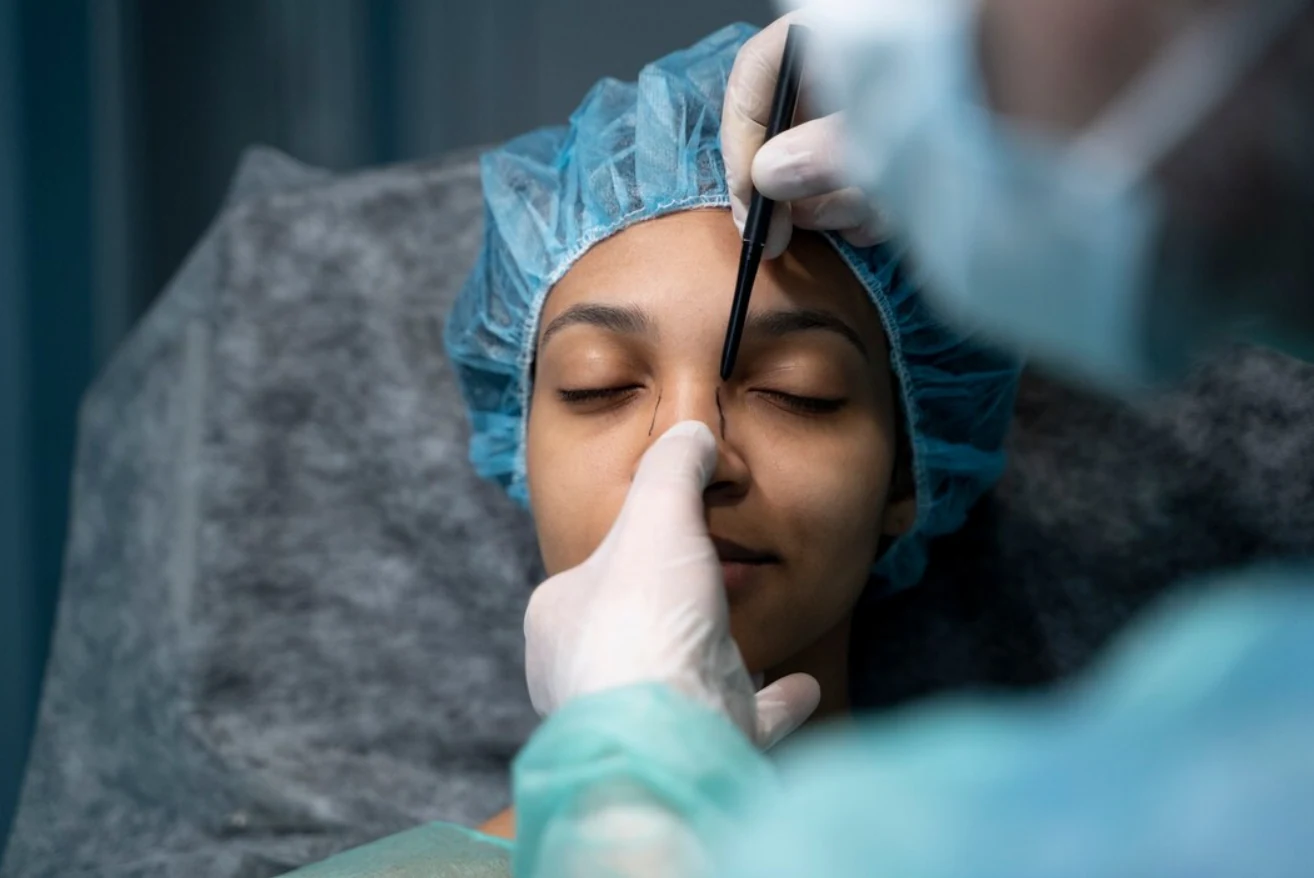
The main difference between the techniques lies in the surgical access to the bony and cartilaginous structures of the nose. In open rhinoplasty, the surgeon makes a small incision on the columella — the strip of tissue between the nostrils — which allows a better view of the cartilage and bones of the nose. In closed rhinoplasty, all incisions are made inside the nose, so no visible scars remain on the outside.
How Does Open Rhinoplasty Work?
The open technique gives the surgeon a good view of the bony and cartilaginous structures of the nose. During the operation, it is possible to correct the shape of the tip, eliminate asymmetry, repair the septum, and, if necessary, strengthen the cartilage framework.
After open rhinoplasty, a small scar remains on the columella, which becomes barely noticeable over time. At the GENEVITY longevity and quality of life center, surgical methods are complemented with non-surgical procedures. In particular, cell therapy is used to improve the condition of the skin, correct scars, and stimulate collagen production.
Features of Closed Rhinoplasty
In closed rhinoplasty, the surgeon performs the correction through internal incisions, leaving no external scars. Recovery is usually faster than after open surgery, although much depends on the extent of the intervention.
Comment from a GENEVITY plastic surgeon: “Many patients prefer closed rhinoplasty precisely because there are no external scars. However, this should not be the main selection criterion. We recommend open or closed access depending on which changes are needed and which approach will allow us to achieve the desired result.”

Key Differences Between Open and Closed Rhinoplasty
To understand how open rhinoplasty differs from closed, it is worth comparing several features:
access: with the open technique, the surgeon has freer access to the bones and cartilage of the nose, while with the closed technique the correction is performed through internal incisions;
capabilities: open access is more often used for complex changes, closed access for less extensive correction;
recovery: after closed surgery, swelling usually subsides somewhat faster.
With both techniques, the final result forms gradually as the tissues heal. For a harmonious appearance, it is important to consider not only the shape of the nose but also the facial contours and the condition of the skin. At the GENEVITY longevity and quality of life center, Ultraformer MPT is used for skin tightening and correction of the facial oval, and it can become part of comprehensive aesthetic rejuvenation.
In Which Cases Can the Open Technique Be Used?
In plastic surgery, open rhinoplasty is more often chosen for complex nasal correction, when free access to the bony and cartilaginous structures is needed. The main indications are:
pronounced asymmetry or deformity after an injury;
complex correction of the shape and position of the tip of the nose;
the need to strengthen or lengthen the tip with cartilage grafts;
revision rhinoplasty, especially when the anatomy has changed significantly after a previous operation.
Open access allows the surgeon to better control the position of the cartilage and to fix it securely in the desired position.
When Can Closed Rhinoplasty Be Used?
The closed technique is more often used for moderate correction of the shape of the nose: removing a hump, changing the bridge, or eliminating minor asymmetry. Its main advantages are the absence of an external scar and the possibility of faster recovery. The main limitation is less free access to the bony and cartilaginous structures of the nose.
The surgeon explains the pros and cons of closed rhinoplasty in detail at the consultation and tells you whether this technique is suitable for a particular patient.
How Is the Surgical Method Chosen?
The difference between open and closed rhinoplasty lies primarily in the surgical access, not in the quality of the result. During a consultation, the plastic surgeon assesses the anatomy of the nose, the condition of the septum, and the thickness of the skin, and determines a suitable technique based on the patient’s wishes.
Planning rhinoplasty? Book a consultation at the GENEVITY longevity and quality of life center in Dnipro to discuss correction options and the expected result.
This information is for general awareness and does not replace a doctor's consultation.

Author
Dmytro Detsyk