Liposuction in Dnipro
Liposuction at GENEVITY is the surgical removal of localised fat deposits that persist at a stable weight and do not respond to diet or exercise. It reshapes the contours of specific areas, but it is not a weight-loss method: it addresses shape rather than body mass.
What Is Liposuction and What Results Can You Expect?
Fat is distributed unevenly through the body, and that distribution is largely inherited. As a result certain areas — the flanks, inner thighs, the area under the chin — can retain volume even in people whose weight is stable and normal. During liposuction a cannula is introduced through small punctures, and the surgeon removes fat from the deeper layers to shape the contour of the area. The access points are small, so the scars are usually barely visible. The key limitation is that liposuction works with fat, not skin. If the skin has lost its elasticity, it may not retract once volume is removed and can look more lax than before. In such cases an operation that removes excess skin is needed.
The result depends on the starting distribution of fat, skin elasticity, how much fat is removed, weight stability and adherence to postoperative recommendations.
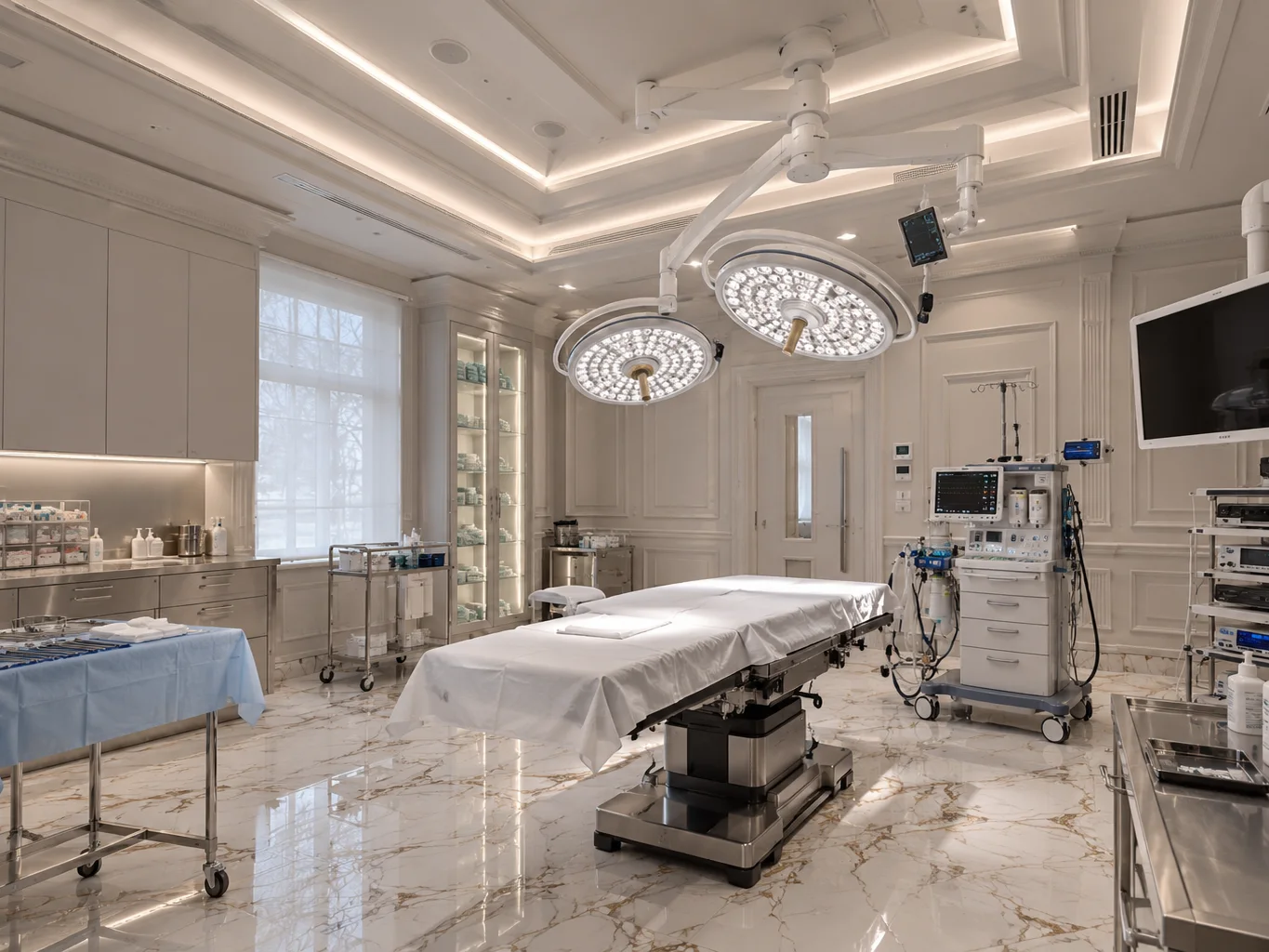
Expected improvements after liposuction may include
Reduced volume in the treated areas.
More defined contours at the waist and flanks.
Better proportion between different areas of the body.
Correction of localised deposits resistant to diet.
Reduction of the area under the chin where it is treated.
A smoother silhouette in clothing.
Indications for Liposuction
- Localised fat deposits resistant to diet and exercise.
- Excess volume at the flanks and waist.
- Fat deposits on the inner or outer thighs.
- Fullness under the chin.
- Individual areas out of proportion with the overall silhouette.
- Fat deposits around the knees, arms or back.
- Asymmetry of body contours.
- Skin in the treatment area that has retained its elasticity.
Contraindications for Liposuction
- Acute infectious and inflammatory conditions.
- Uncontrolled diabetes.
- Blood clotting disorders.
- Decompensated cardiovascular and other severe systemic conditions.
- A tendency to keloid scarring.
- Conditions in which anaesthesia or surgery would carry an unacceptably high risk.
- Pregnancy and breastfeeding.
- Smoking, without a willingness to stop three to four weeks before and after surgery.
- Unstable weight, or weight loss that is still ongoing.
- A history of thrombosis or thromboembolic complications without appropriate preparation.
- Active cancer.
- Pronounced loss of skin elasticity in the treatment area.
- Expecting the operation to produce weight loss rather than contour correction.
- Other individual limitations determined by the doctor.
Liposuction may be recommended for localised fat deposits that persist at a stable, normal weight. It is not a treatment for obesity and does not replace weight loss. The indications are determined by fat distribution, skin elasticity, general health and how realistic the patient's expectations are. Because this is a surgical procedure, it requires a consultation with a plastic surgeon, preoperative assessment and a consultation with an anaesthetist beforehand. The final decision on whether surgery can go ahead is made on the basis of that assessment.
How Is Liposuction Performed?
Consultation with a Plastic Surgeon
The doctor assesses the distribution of fat, its thickness in each area, skin elasticity and overall body proportions. Whether liposuction alone will suffice, or excess skin also needs removing, is assessed separately. The treatment areas and approximate volume are determined, and expectations, possible results, limitations and risks are discussed.
Preoperative Preparation
The patient undergoes laboratory and instrumental investigations, a consultation with an anaesthetist and, where indicated, with further specialists. The doctor advises on preparation, medication, diet and the regimen before surgery.
The Liposuction Procedure
Depending on the volume and the number of areas, the operation is performed under general anaesthesia or under local anaesthesia with sedation. A solution is infiltrated into the treatment area, and fat is then removed from the deeper layers through small punctures using a cannula. The surgeon works evenly to avoid contour irregularities. The punctures are usually placed within natural creases.
Postoperative Monitoring
After the operation the patient remains under medical supervision in hospital. A compression garment, pain relief, early mobilisation and wound care are prescribed. The length of stay depends on the extent of the procedure and the patient's condition.
Recovery and Follow-Up
Swelling, bruising, firmness of the tissues and discomfort in the treated areas are common in the first few days. A compression garment is worn for the prescribed period — it has a significant effect on how even the result is. Initial recovery usually takes two to three weeks. Swelling subsides gradually and the final contours emerge over three to six months.
Benefits of Liposuction at GENEVITY
Skin Elasticity Assessed Beforehand — Before planning, the surgeon establishes whether the skin will retract once volume is removed, or whether a procedure to remove it is needed.
Several Areas in One Procedure — Where indicated, adjacent areas are treated in one operation so the silhouette stays proportionate.
Small Access Points — The punctures are planned within natural creases, so the marks they leave are usually inconspicuous.
Operating at a Stable Weight — Surgery is planned once weight is stable, since later fluctuations change the result achieved.
Combination with Abdominoplasty Where Indicated — If there is excess skin as well as fat, liposuction is combined with an operation to remove it.
Medical Care and Follow-Up — Preoperative assessment, anaesthetic care, the inpatient stay and postoperative review are essential parts of surgical treatment.
Liposuction, like any surgical procedure, carries risks. These include bleeding, haematoma, seroma, infection, contour irregularity and asymmetry, changes in skin sensation, prolonged swelling, firmness of the tissues, thrombotic complications, and the possibility that further correction may be needed. All material risks are discussed before the procedure.
Before / After
Real results of GENEVITY patients. Drag the divider to see the change.
 BeforeAfter
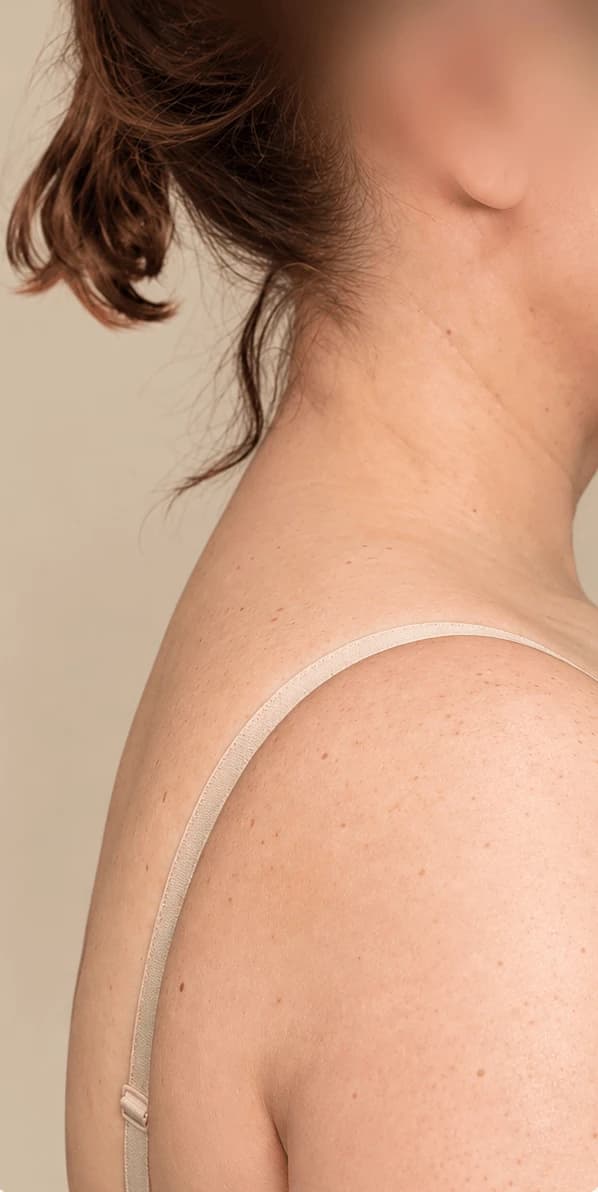
- Treated area:
- Neck hump
Photos are published with patient consent. Results are individual and depend on the starting condition, age and adherence to the doctor's recommendations.
Our Medical Team
Consultations are provided by specialists across multiple disciplines, ensuring a comprehensive approach to your health
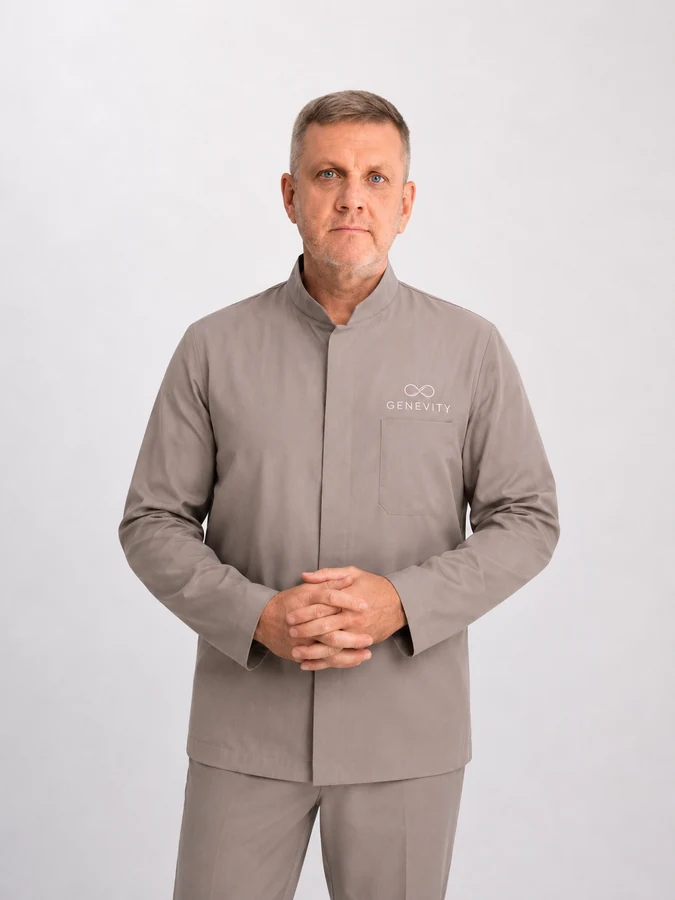
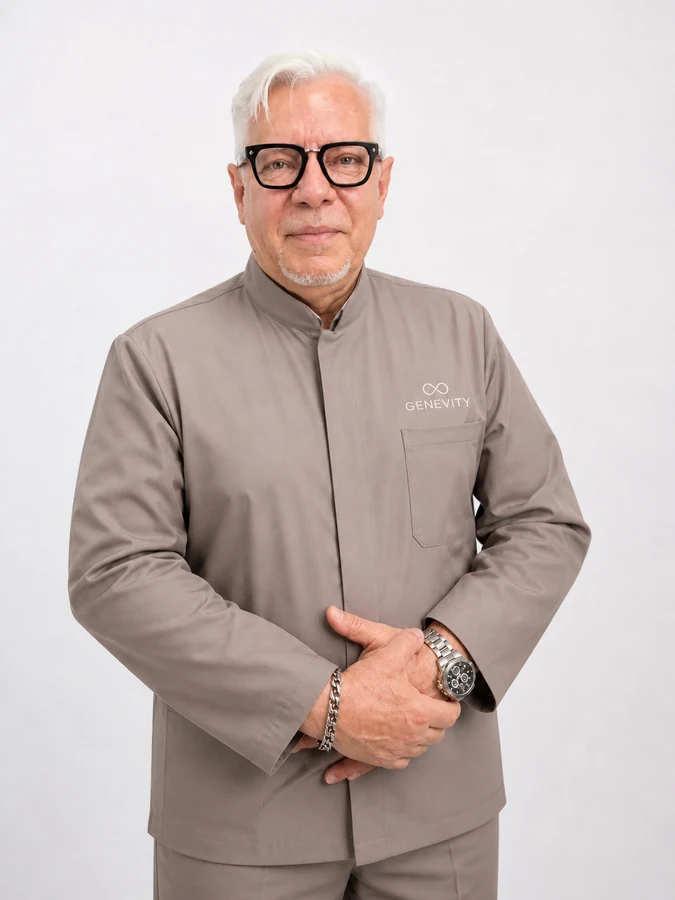
Harmash Serhii Kostiantynovych
Plastic Surgeon, Oncologist, Dermatologist
Experience: 41 years
Learn MoreYou may also be interested in
Body Plastic Surgery
Body plastic surgery at GENEVITY covers abdominoplasty, liposuction, body contouring, contouring after weight loss and diastasis repair. The plastic surgeon assesses the condition of the skin, the distribution of fat and the muscles of the abdominal wall in order to establish whether surgery is appropriate, select a technique and plan the recovery.
Body Contouring
Body contouring at GENEVITY is comprehensive surgical reshaping of the silhouette for cases where a single procedure is not enough. The plan may combine liposuction of several areas, removal of excess skin and work on the muscles, so that the proportions of the body are coherent rather than improved in one isolated area.
Abdominoplasty
Abdominoplasty at GENEVITY is the surgical correction of the abdominal wall: removal of excess skin and fat and, where indicated, repair of separated abdominal muscles. It addresses what diet, exercise and liposuction cannot, and is planned at a stable weight.
Contouring After Weight Loss
Body contouring after weight loss at GENEVITY removes the excess skin left behind by substantial weight loss. The operation completes work the patient has already done: it removes the folds of skin and fat that do not retract on their own and do not reduce with exercise.
FAQ
No. Liposuction is not a weight-loss method and does not treat obesity. It reshapes specific areas at a stable weight. If the goal is to reduce body mass, diet, physical activity and, where needed, specialist support come first.
The volume is limited for safety: removing a large amount of fat at once increases the risk of complications. The surgeon determines a safe volume individually, taking the treatment areas and the patient's health into account.
The fat cells removed do not return. Those remaining, both in the treated areas and elsewhere, can enlarge with weight gain. The result is therefore maintained by keeping weight stable.
Liposuction is not a treatment for cellulite. It addresses the volume of the deeper fat layers, whereas cellulite relates to the structure of the superficial layers and the connective tissue septae. In some cases it can even become more noticeable.
Where elasticity is preserved, the skin usually retracts on its own. If it is reduced — after pregnancy, substantial weight loss or with age — the skin may remain lax, and a procedure to remove it is then needed.
Most often the abdomen, flanks, thighs, buttocks, knees, arms, back and the area under the chin. Which areas are treated, and whether treating them is appropriate, is decided at the consultation.
Initial recovery usually takes two to three weeks, with a compression garment and restricted activity. Swelling subsides gradually, and the final contours emerge over three to six months.
Yes. Compression reduces swelling, helps the tissues heal evenly and has a significant effect on how smooth the final contour is. Not wearing it as directed is one cause of irregularity.
Access is through small punctures planned within natural creases. The marks they leave are usually inconspicuous, although completely invisible healing cannot be guaranteed.
The cost depends on the number and size of the areas treated, the extent of surgery, the anaesthesia, the investigations and whether an inpatient stay is needed. An individual estimate is prepared after a consultation.
Book a consultation
Our specialists will create the optimal program for you
This information is for general awareness and does not replace a doctor's consultation.