Breast Reduction in Dnipro
Breast reduction at GENEVITY is reduction mammoplasty: it reduces the volume of the breasts, removes excess skin and lifts the breast at the same time. It is performed for both aesthetic and medical reasons, when large breasts place strain on the spine and limit everyday life.
What Is Breast Reduction and What Results Can You Expect?
Excessively large breasts are not only an aesthetic matter. Their weight places constant strain on the cervical and thoracic spine, which can bring back and neck pain, grooving from bra straps on the shoulders, and skin irritation in the fold beneath the breast. Reduction mammoplasty removes part of the glandular and fatty tissue together with excess skin, moves the nipple-areola complex to a higher position and, where needed, reduces the diameter of the areola. Unlike augmentation, this operation does two things at once: it reduces volume and lifts the breast. How much tissue can be removed is decided individually, limited by the need to preserve the blood supply to the nipple-areola complex.
The result depends on the starting volume and shape, skin elasticity, how much tissue is removed, how healing proceeds and adherence to postoperative recommendations.
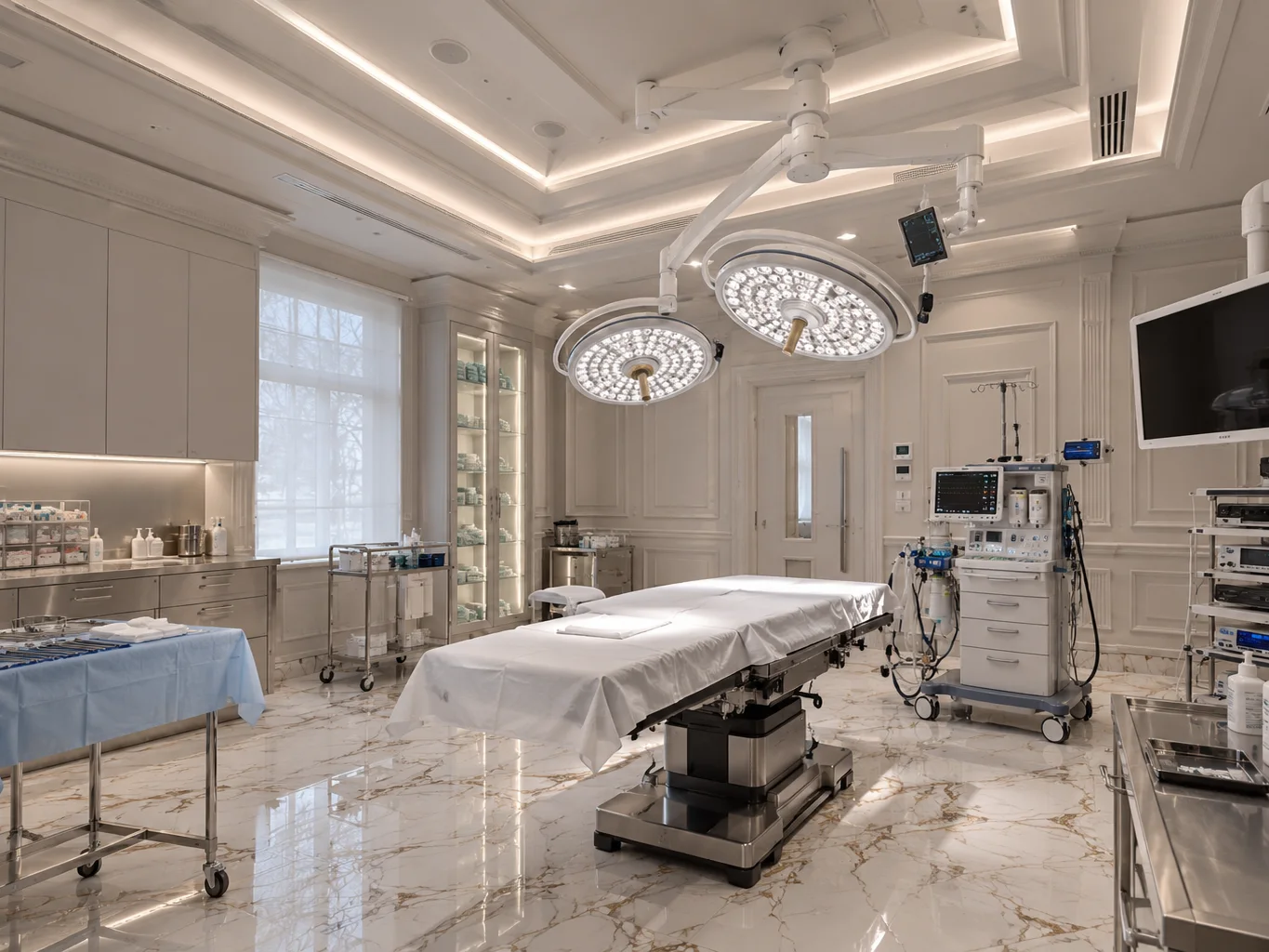
Expected improvements after breast reduction may include
A reduction in the volume and weight of the breasts.
Elevation of the breast and the nipple-areola complex.
Less strain on the back, neck and shoulders.
Resolution of grooving from bra straps.
Less skin irritation in the fold beneath the breast.
Correction of asymmetry where the breasts differ in volume.
A wider choice of clothing and underwear.
Indications for Breast Reduction
- Excessively large breasts (hypertrophy, gigantomastia).
- Neck, back and shoulder pain related to breast weight.
- Deep grooving from bra straps on the shoulders.
- Intertrigo and skin irritation in the inframammary fold.
- Breast descent associated with large volume.
- Pronounced asymmetry in breast volume.
- Physical activity limited by breast size.
- Breasts out of proportion with the build of the body.
Contraindications for Breast Reduction
- Acute infectious and inflammatory conditions.
- Uncontrolled diabetes.
- Blood clotting disorders.
- Decompensated cardiovascular and other severe systemic conditions.
- A tendency to keloid scarring.
- Conditions in which anaesthesia or surgery would carry an unacceptably high risk.
- Pregnancy and breastfeeding.
- Breast conditions found during assessment that require treatment.
- Active cancer.
- Smoking, without a willingness to stop three to four weeks before and after surgery.
- Pregnancy planned in the near future.
- Other individual limitations determined by the doctor.
Reduction may be recommended where breast volume is excessive, placing physical strain on the body or out of proportion with it. Some of the indications are medical rather than purely aesthetic. They are determined by anatomy, the condition of the tissues, general health and how realistic the patient's expectations are. Because this is surgery on the breast, it requires a consultation with a plastic surgeon, a consultation with a breast specialist including imaging, preoperative assessment and a consultation with an anaesthetist beforehand.
How Is Breast Reduction Performed?
Consultation with a Plastic Surgeon
The doctor assesses the volume and shape of the breasts, the degree of descent, the position of the nipple-areola complex, the condition of the skin and symmetry, together with any back and neck pain. The approximate amount of tissue to be removed and the technique — with its corresponding scar pattern — are determined. Expectations, possible results, limitations and risks are discussed.
Preoperative Preparation
The patient has a consultation with a breast specialist including imaging, laboratory and instrumental investigations, and a consultation with an anaesthetist. The doctor advises on preparation, medication and the regimen before surgery.
Surgical Reduction of Volume
The operation is performed under general anaesthesia. The surgeon removes excess glandular and fatty tissue together with excess skin and moves the nipple-areola complex to its new position, preserving its blood supply and its connection to the tissues. Depending on the extent of the procedure, this leaves either a vertical scar or an inverted-T scar. Drains are placed if required.
Postoperative Monitoring
After the operation the patient remains under medical supervision in hospital. A compression garment, pain relief and wound care are prescribed. The length of stay depends on the extent of the procedure and the patient's condition.
Recovery and Follow-Up
Swelling, bruising and discomfort are common in the first few days. A compression garment is worn for the period the doctor prescribes and physical activity is restricted. Initial recovery usually takes three to four weeks. The final shape settles over several months, while the scars mature and fade over a year or more.
Benefits of Breast Reduction at GENEVITY
Personalized Surgical Planning — How much tissue is removed and the incision pattern are determined by the starting volume, the degree of descent and the condition of the skin.
Breast Assessment Before Surgery — The breast consultation and imaging are carried out at the centre before the procedure is planned.
Reduction and Lift in One Operation — Reduction mammoplasty reduces volume and lifts the breast within a single procedure.
Attention to Functional Symptoms — Not only aesthetic goals are considered, but also back and neck pain, skin irritation and restricted activity.
Medical Care and Follow-Up — Preoperative assessment, anaesthetic care, the inpatient stay and postoperative review are essential parts of surgical treatment.
Breast reduction, like any surgical procedure, carries risks. These include bleeding, haematoma, infection, impaired wound healing, altered or lost nipple sensation, compromised blood supply to the nipple-areola complex, asymmetry, noticeable scarring, loss of the ability to breastfeed, and the possibility that further surgery may be needed. All material risks are discussed before the procedure.
Our Medical Team
Consultations are provided by specialists across multiple disciplines, ensuring a comprehensive approach to your health


Harmash Serhii Kostiantynovych
Plastic Surgeon, Oncologist, Dermatologist
Experience: 41 years
Learn MoreYou may also be interested in
Breast Plastic Surgery
Breast plastic surgery at GENEVITY covers augmentation, reduction, lifting and correction of breast shape and asymmetry. The plastic surgeon assesses the anatomy of the chest, the condition of the glandular tissue and skin, body proportions and the patient's wishes in order to establish whether surgery is appropriate, select a technique and plan the recovery.
Breast Lift
A breast lift (mastopexy) at GENEVITY is the surgical correction of breast position without changing volume. The operation removes excess stretched skin and moves the nipple-areola complex to a higher position. Where needed, mastopexy is combined with augmentation or reduction.
Breast Shape and Asymmetry Correction
Correction of breast shape and asymmetry at GENEVITY surgically evens out the volume, shape and position of the breasts where they differ noticeably from each other or have particular structural features. The plan can differ for each breast: one may be augmented while the other is reduced or lifted.
Breast Augmentation
Breast augmentation at GENEVITY is mammoplasty using implants to change the volume and shape of the breasts. The plastic surgeon selects the type, shape and size of implant, together with the approach and the plane of placement, individually, taking into account the anatomy of the chest, the condition of the tissues and body proportions.
FAQ
This is decided individually. It is limited by the need to preserve the blood supply to the nipple-areola complex and to achieve a shape proportionate to the body. The surgeon gives a realistic range after examination and measurement.
Yes. Reduction mammoplasty moves the nipple-areola complex higher and removes excess skin, so the lift is part of the same operation.
Depending on the extent of the procedure, the result is either a vertical scar (around the areola and down to the fold) or an inverted-T scar, which additionally runs along the fold beneath the breast. These are larger scars than augmentation leaves, and this is discussed before surgery.
Reducing the weight of the breasts lessens the load on the spine, and many patients report relief. Back pain can have other causes, however, so complete resolution of symptoms cannot be guaranteed.
The operation involves the glandular tissue and the ducts, so the ability to breastfeed may be reduced or lost. If pregnancy is planned, this is always discussed before surgery.
Temporary changes in sensation after surgery are common. Sensation usually returns gradually, but partial or lasting loss is one of the possible complications.
Initial recovery usually takes three to four weeks, with a compression garment and restricted activity. The final shape settles over several months, and scars mature over a year or more.
The tissue removed does not grow back. Breast volume can nonetheless increase with significant weight gain, during pregnancy and breastfeeding, or with hormonal change, so a stable weight helps preserve the result.
Reduction is usually considered once the breasts have finished developing. Where hypertrophy is pronounced and causing functional symptoms, surgery may be considered earlier on medical grounds. The decision is made individually.
The cost depends on the extent of the procedure, the technique, the anaesthesia, the investigations and the length of the inpatient stay. An individual estimate is prepared after a consultation with the plastic surgeon.
Book a consultation
Our specialists will create the optimal program for you
This information is for general awareness and does not replace a doctor's consultation.