Body Contouring After Weight Loss in Dnipro
Body contouring after weight loss at GENEVITY removes the excess skin left behind by substantial weight loss. The operation completes work the patient has already done: it removes the folds of skin and fat that do not retract on their own and do not reduce with exercise.
What Is Contouring After Weight Loss?
Skin can stretch, but not without limit. After a prolonged period at a high weight, the collagen and elastin fibres within it undergo irreversible change, and when the volume goes the skin does not return to its former state — it remains as excess. This is most often seen on the abdomen, where an apron of skin forms, and also on the inner thighs, upper arms, buttocks and chest. The folds can chafe, cause skin irritation and limit physical activity. Correction after substantial weight loss almost always involves several areas, so it is planned in stages. The abdomen, as the most troublesome area, is usually addressed first, with subsequent stages several months apart. This operation always involves a trade-off: large amounts of excess skin cannot be removed through small incisions, so the scars will be long. Most patients accept this, but it must be understood before surgery rather than after.
The result depends on how much excess skin there is, how long the period of excess weight lasted, the condition of the tissues, the stability of the weight achieved and adherence to postoperative recommendations.
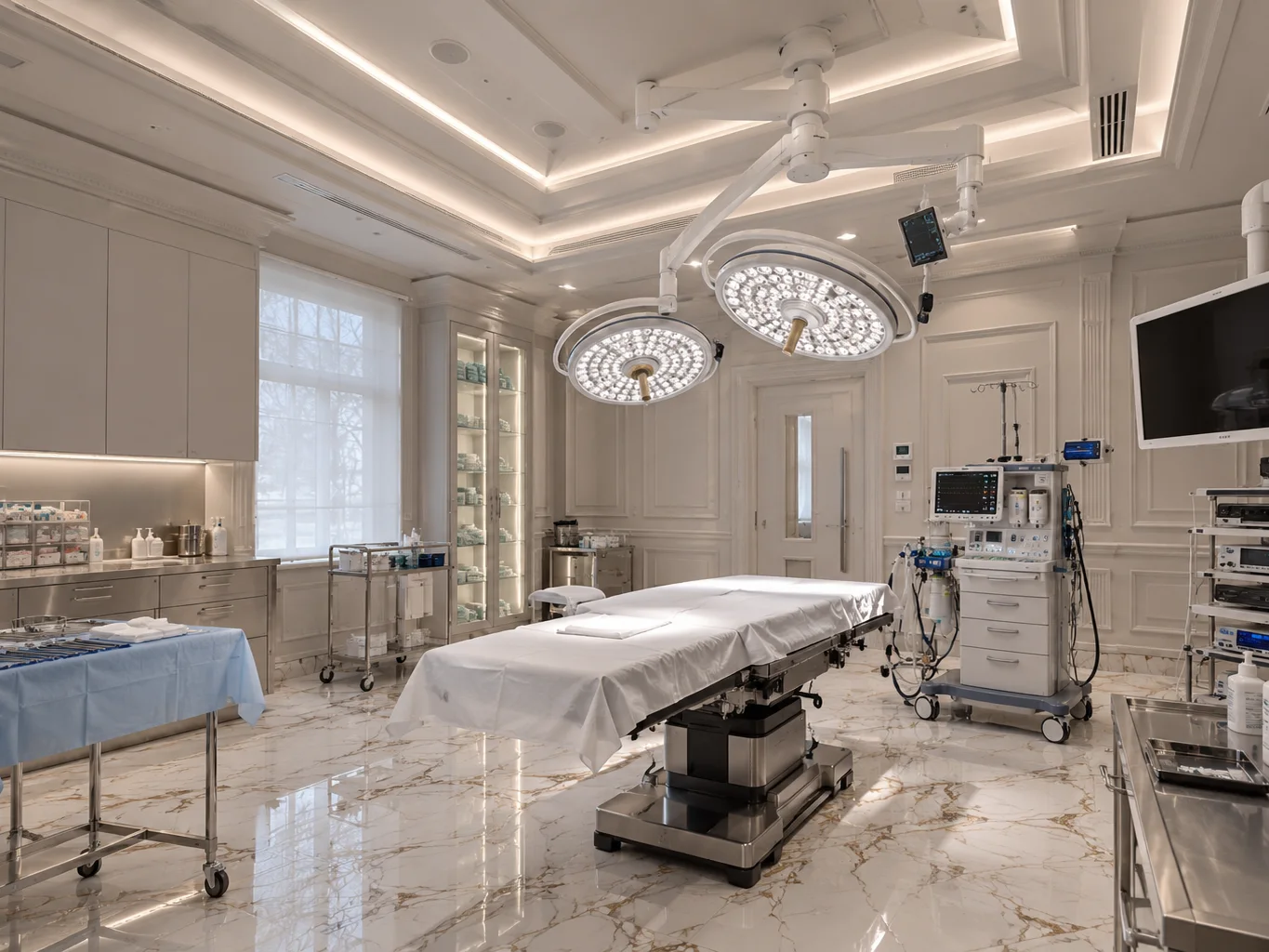
Expected improvements after contouring may include
Removal of the apron of skin on the abdomen.
Resolution of skin and fat folds in the treated areas.
Less skin irritation and chafing within the folds.
Body contours that match the weight achieved.
Fewer limitations on physical activity.
Easier fitting of clothing by size.
Indications for Contouring After Weight Loss
- An apron of skin on the abdomen after substantial weight loss.
- Excess skin on the inner thighs.
- Sagging skin on the upper arms.
- Excess skin on the buttocks and back.
- Intertrigo and skin irritation within the folds.
- Physical activity limited by excess skin.
- Weight stable for at least six to twelve months.
- Weight loss complete, including after bariatric surgery.
Contraindications for Contouring After Weight Loss
- Acute infectious and inflammatory conditions.
- Uncontrolled diabetes.
- Blood clotting disorders.
- Decompensated cardiovascular and other severe systemic conditions.
- A tendency to keloid scarring.
- Conditions in which anaesthesia or surgery would carry an unacceptably high risk.
- Pregnancy and breastfeeding.
- Smoking, without a willingness to stop three to four weeks before and after surgery.
- Unstable weight, or weight loss that is still ongoing.
- A history of thrombosis or thromboembolic complications without appropriate preparation.
- Active cancer.
- Protein, iron or vitamin deficiency after bariatric surgery that has not been corrected.
- Expecting a result without long scars.
- Other individual limitations determined by the doctor.
Contouring may be recommended once weight loss is complete and weight has been stable for at least six to twelve months. After bariatric surgery, nutritional status is assessed as well: protein and vitamin deficiency impairs healing and must be corrected beforehand. The indications are determined by the amount of excess skin, the condition of the tissues, general health and how realistic the patient's expectations are. Because this is a surgical procedure, it requires a consultation with a plastic surgeon, preoperative assessment and a consultation with an anaesthetist beforehand. The final decision on whether surgery can go ahead is made on the basis of that assessment.
How Is Contouring After Weight Loss Carried Out?
Consultation and Assessment of the Areas
The doctor assesses how much excess skin there is in each area and where, the condition of the tissues, whether a hernia or diastasis is present, and the history and stability of the weight loss — including whether it is complete and whether bariatric surgery was involved. Expectations, possible results, limitations and risks are discussed, including the length of the scars.
Assessment of Nutritional Status
After substantial weight loss, particularly following bariatric surgery, protein, iron and vitamin levels are checked. Deficiency impairs wound healing, so it is corrected before surgery where necessary.
Planning the Stages
Because correction usually involves several areas, a staged plan is drawn up. The abdomen is most often done first, with subsequent stages several months apart so that each operation stays within safe limits.
Surgical Removal of Excess Skin
The operation is performed under general anaesthesia. The surgeon removes excess skin and subcutaneous tissue from the planned area, repairs diastasis or hernias where indicated, and shapes the new contour. The length and position of the incisions follow the amount of excess skin, and are planned so the scars are covered by underwear where possible. Drains are placed if required.
Postoperative Monitoring
After the operation the patient remains under medical supervision in hospital. A compression garment, pain relief, early mobilisation and wound care are prescribed. The length of stay depends on the extent of the procedure and the patient's condition.
Benefits of Contouring at GENEVITY
Staged Planning — Correction of several areas is spread over time so that each operation stays within safe limits.
Checking Readiness for Surgery — Weight stability and nutritional status are both assessed, since both directly affect wound healing.
Planning Where the Scars Sit — The incisions are planned so that, where possible, the scars sit in areas covered by underwear.
Hernias and Diastasis Addressed at the Same Time — Where indicated, these are dealt with within the same operation.
Medical Care and Follow-Up — Preoperative assessment, anaesthetic care, the inpatient stay and postoperative review are essential parts of surgical treatment.
Contouring after weight loss, like any surgical procedure, carries risks. These include bleeding, haematoma, seroma, infection, impaired wound healing, wound dehiscence, tissue necrosis, changes in skin sensation, long and noticeable scars, thrombotic complications, and the possibility that further surgery may be needed. The risk of healing complications is higher than with standard procedures, particularly after bariatric surgery. All material risks are discussed before the procedure.
Our Medical Team
Consultations are provided by specialists across multiple disciplines, ensuring a comprehensive approach to your health

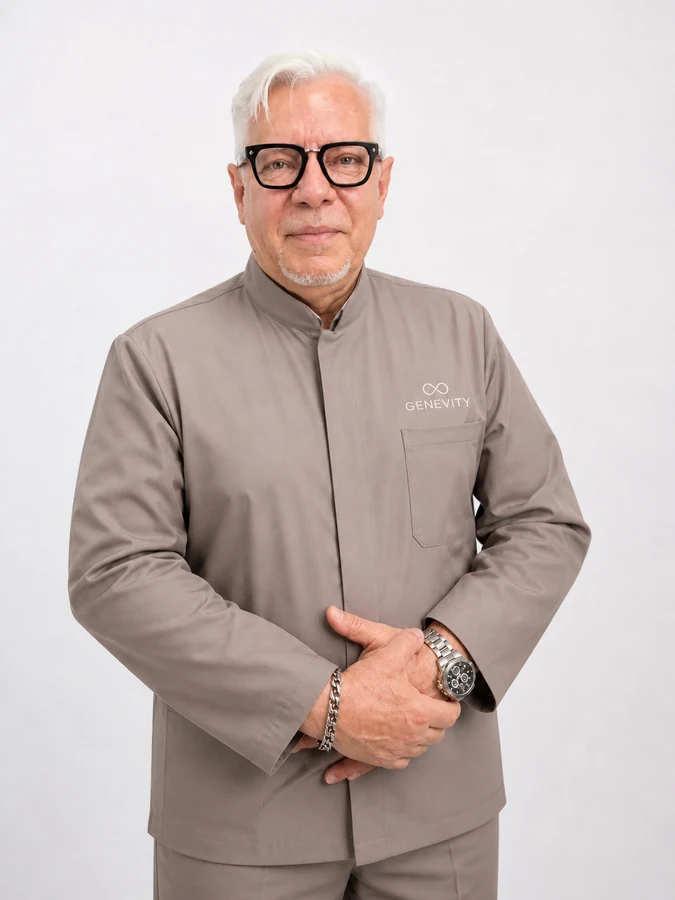
Harmash Serhii Kostiantynovych
Plastic Surgeon, Oncologist, Dermatologist
Experience: 41 years
Learn MoreYou may also be interested in
Body Plastic Surgery
Body plastic surgery at GENEVITY covers abdominoplasty, liposuction, body contouring, contouring after weight loss and diastasis repair. The plastic surgeon assesses the condition of the skin, the distribution of fat and the muscles of the abdominal wall in order to establish whether surgery is appropriate, select a technique and plan the recovery.
Abdominoplasty
Abdominoplasty at GENEVITY is the surgical correction of the abdominal wall: removal of excess skin and fat and, where indicated, repair of separated abdominal muscles. It addresses what diet, exercise and liposuction cannot, and is planned at a stable weight.
Body Contouring
Body contouring at GENEVITY is comprehensive surgical reshaping of the silhouette for cases where a single procedure is not enough. The plan may combine liposuction of several areas, removal of excess skin and work on the muscles, so that the proportions of the body are coherent rather than improved in one isolated area.
Liposuction
Liposuction at GENEVITY is the surgical removal of localised fat deposits that persist at a stable weight and do not respond to diet or exercise. It reshapes the contours of specific areas, but it is not a weight-loss method: it addresses shape rather than body mass.
FAQ
Usually once weight has been stable for at least six to twelve months and the loss is complete. If weight is still falling, the excess skin will continue to increase and the result of surgery would change.
No. Stretched skin whose fibres have been irreversibly altered does not retract with exercise or with device-based treatments. The only way to remove a significant excess is to excise it surgically.
Yes. Removing a large amount of excess skin requires long incisions; short ones cannot do it. The scars are planned where underwear will cover them if possible, but they remain visible. This is the central trade-off of the operation.
Usually not. The extent of such an operation would be too great and the time under anaesthesia too long. Correction is planned in stages, most often starting with the abdomen, with several months between them.
Yes, but weight must have stabilised and nutritional status must be checked. Protein, iron and vitamin deficiencies are common after bariatric surgery and impair healing, so they are corrected beforehand.
After each stage, initial recovery usually takes four to six weeks, with a return to full activity at around two to three months. The scars mature and fade over a year or more.
Yes. The operation is larger, and tissue quality and nutritional status are often poorer than in patients without a history of major weight loss. Thorough preoperative preparation is therefore particularly important.
Yes, where the irritation is caused by the skin folds themselves. Removing the excess skin removes the fold in which moisture collects and friction occurs.
No. Surgery is performed at the weight achieved, provided it is stable. Gaining weight beforehand would only increase the volume of fat and raise the risks.
The cost depends on the number of stages, the areas treated, the extent of each operation, the anaesthesia, the investigations and the length of the inpatient stay. An individual estimate is prepared after a consultation.
Book a consultation
Our specialists will create the optimal program for you
This information is for general awareness and does not replace a doctor's consultation.