Photo-removal of pigmentation in Dnipro
Pigmentation photo-removal at GENEVITY on the M22 Stellar Black: pulsed light selectively heats the melanin inside a spot while leaving healthy skin untouched. Solar lentigines, freckles and post-inflammatory marks fade in 2-4 sessions.
Duration
20-40 minutes
Effect
lasting, provided the skin is protected from the sun
How pigmentation photo-removal works
Pigmentation photo-removal is based on selective photothermolysis. Melanin absorbs light of a particular wavelength far more strongly than the surrounding tissue. When the pulse reaches a spot, the pigment heats instantly and breaks down while the healthy skin beside it stays intact. The destroyed melanin travels to the surface: over 3-7 days the spot darkens, forms a thin crust and flakes away. Part of the pigment is cleared by the lymphatic system. At GENEVITY the treatment is done on the M22 Stellar Black, a platform with a range of filters that allow the parameters to be matched to the type of pigmentation and your phototype. This is essential: identical settings for a solar lentigo and for melasma produce very different outcomes, and on darker skin the wrong parameters can make things worse. That is why the physician establishes the nature of the spots before the first session. Pigmentation may be solar, post-inflammatory or hormonal - and each responds to light differently.
Which pigmentation phototherapy addresses
- Solar lentigines - spots from years of sun exposure
- Freckles on the face, shoulders and decolletage
- Post-inflammatory hyperpigmentation after breakouts
- Uneven tone and dull-looking skin
- Pigmentation on the hands and forearms
- Age spots that have appeared after 40
When the method is not indicated
- A fresh tan - at least three weeks must pass
- Active melasma, where light can intensify the patch
- Photosensitising medication
- Pregnancy and breastfeeding
- Suspicious lesions or naevi in the treatment area
- Fitzpatrick phototype VI, which calls for other methods
How a pigmentation photo-removal session works
Dermatoscopy and assessment
The physician examines every spot, rules out suspicious lesions and determines the type of pigmentation. The treatment is never done without this step.
Filter selection and a test pulse
A filter is chosen for your phototype and a test pulse delivered to a small area to check how the skin responds.
Treating the pigmented areas
The physician treats individual spots or the whole zone, depending on how dense the pigmentation is. It feels like a brief hot snap.
Protection and instructions
A soothing product and SPF 50 are applied. The physician explains how to handle the crusts and how long to avoid the sun.
Advantages of pigmentation phototreatment
Selective action, leaving healthy skin undamaged
A visible result after the very first session
Overall skin tone evens out at the same time
Works on the face, neck, decolletage and hands
Minimal recovery: the crusts flake off within a week
Mandatory dermatoscopy before each session - safety first
What happens after the treatment
Immediately after the session the pigment spots darken, sometimes noticeably. This is the expected reaction: the destroyed melanin is rising to the surface. Over 3-7 days thin dark crusts form and flake away on their own, leaving lighter, more even skin beneath. A single session lightens spots by roughly 50-70%. Fully evening out the tone usually takes 2-4 sessions three to four weeks apart. Rules after the treatment: - do not pick the crusts - this is the main cause of white marks and small scars; - SPF 50 daily for at least a month, reapplied every 2-3 hours in the sun; - avoid sauna, swimming pools and intensive training for the first three days; - postpone acids and retinoids for seven days. One thing to understand: phototherapy removes the spots you have, but it does not change your tendency to pigment. Without daily UV protection new spots will appear within a season or two. This is why the physician always prescribes home care alongside the sessions - it is part of the treatment, not an add-on.
FAQ
Solar lentigines and superficial spots usually clear completely in 2-4 sessions. Deeper and hormonally driven pigmentation lightens but can return, and there a combined approach with an endocrinologist and constant photoprotection is needed. The physician will tell you honestly at the consultation what result is realistic for you.
Preferably not. Tanned skin contains more melanin, so the light is absorbed non-selectively and the risk of burns and rebound pigmentation rises. October to March is the ideal window. If treatment is needed in summer, the physician allows at least three weeks after sun exposure and works at reduced settings.
The sensation is brief and easily tolerated - like a light hot snap against the skin. The most sensitive areas are over bone and at the temples. Anaesthesia is not usually needed, and the handpiece has built-in cooling that removes most of the discomfort.
Nothing. They must not be picked, steamed or scrubbed off - they should come away on their own within 5-7 days. Cleanse gently and apply the prescribed repair cream and SPF. If a crust persists beyond ten days or the surrounding skin becomes red, call us and the physician will check the area.
Pulsed light works across a broad spectrum and covers a large area at once, which suits diffuse pigmentation and overall tone correction. A laser uses a single wavelength with pinpoint precision and handles individual dense spots better. The physician chooses by the nature of the pigmentation, and sometimes combines both.
Always. The physician performs dermatoscopy on every spot: lesions that must never be treated with light sometimes hide behind ordinary-looking pigmentation. The type of pigmentation also determines whether phototherapy will help at all - with melasma, for instance, it can make matters worse.
The price depends on the area: a single spot, the face, the hands or the decolletage are priced differently. Current prices are in the Prices section and the administrator will quote them when you book. The physician gives the exact figure after dermatoscopy, once the number of sessions is clear.
Our Medical Team
Consultations are provided by specialists across multiple disciplines, ensuring a comprehensive approach to your health
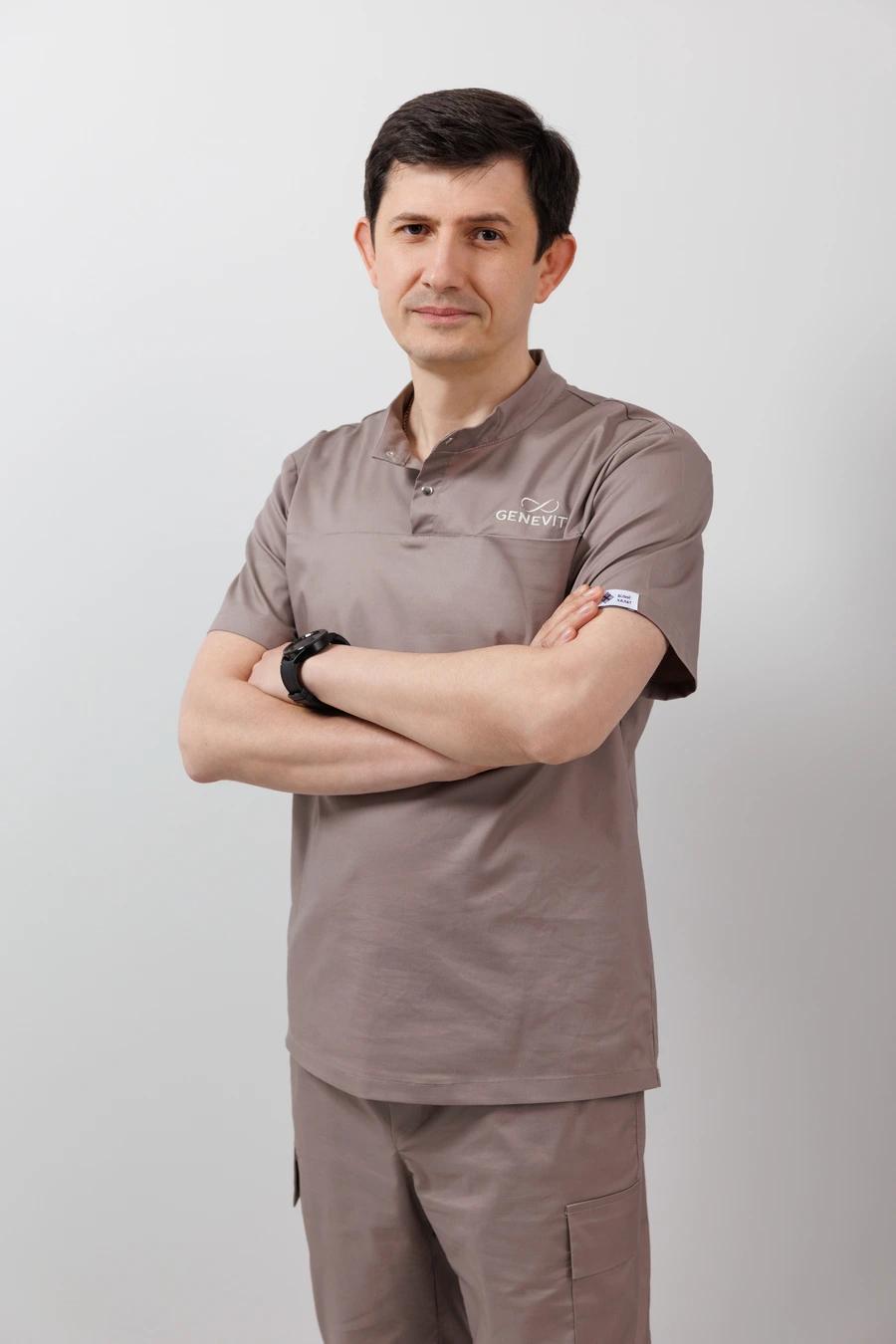
Bielianushkin Viktor Ihorovych
Branch Director, Dermatologist / Cosmetologist
Experience: 20 years
Learn More
Genevity Hardware Solutions
M22 STELLAR BLACK
A skin improvement procedure that evens out tone and reduces pigmentation.
You may also be interested in
Pigmentation Removal
Pigmentation removal at GENEVITY is laser lightening of hyperpigmentation with the M22 Stellar Black. We clear solar lentigines, freckles, and post-inflammatory marks and even out the tone of the face and hands. Dnipro.
Photorejuvenation
Photorejuvenation with the M22 Stellar Black platform at GENEVITY: correction of pigmentation, vascular lesions, and redness, with even tone and no downtime. Dnipro, medical supervision.
M22 Stellar Black
M22 Stellar Black at GENEVITY - IPL + Nd:YAG for pigmentation, rosacea, and spider veins. Minimal recovery, 3-5 sessions.
from 1,600 UAH
HydraFacial
HydraFacial at GENEVITY - 6 actions in one session: cleansing, exfoliation, extraction, serums, hydration, protection. Safe in summer for all skin types.
from 4,000 UAH
Book a consultation
Our specialists will create the optimal program for you
This information is for general awareness and does not replace a doctor's consultation.