Pigmentation removal in Dnipro
Pigmentation removal at GENEVITY is laser lightening of hyperpigmentation with the M22 Stellar Black. We clear solar lentigines, freckles, and post-inflammatory marks and even out the tone of the face and hands. Dnipro.
Duration
20-40 minutes
Effect
12-24 months
How the Laser Lightens Pigment Spots
A pigment spot is a cluster of melanin in the epidermis or dermis. Melanin absorbs light far more readily than the surrounding tissue, and the method is built on exactly that. A light pulse heats the pigment cluster to the point where it fragments into small particles. Some rise to the surface and shed with the horny layer over 7-14 days; the rest are cleared by the lymphatic system. The healthy skin alongside is left intact. Diagnosis is the key step. Hyperpigmentation has different origins: solar lentigines, post-inflammatory marks, melasma. Melasma in particular calls for a more cautious approach — treatment that is too aggressive can worsen it. So the doctor identifies the type of spot first and only then selects the parameters. What the procedure addresses: - Solar lentigines and age spots on the face and hands - Freckles, if you would like them lightened - Post-inflammatory pigmentation after breakouts and injuries - Uneven tone and areas of photoageing
Without daily SPF 50 the pigmentation returns — this is not a precaution but a condition of the result. UV restarts melanin synthesis in the very same areas.
Indications for Pigmentation Removal
- Solar lentigines and age spots
- Pigmentation on the hands, décolletage, and shoulders
- Post-inflammatory marks after acne, scratches, or burns
- Freckles, if you wish to lighten them
- Uneven facial tone and signs of photoageing
Contraindications
- Pregnancy and breastfeeding
- A fresh tan or sunbed use in the last 4 weeks
- Taking photosensitising medication
- Suspected skin malignancy — a dermatologist consultation is required
- Active inflammation or infection in the treatment area
- Oncological disease, epilepsy
How Laser Pigment Spot Removal Works
Identifying the type of pigmentation
The doctor identifies the origin of the spots, assesses your phototype, and rules out lesions needing a different approach.
Selecting the parameters
A filter and energy level are matched to the pigment type and phototype, and a test pulse is delivered.
Treating the spots
Each area is targeted individually. The spot darkens right after the pulse — this is the expected reaction.
Shedding
Over 7-14 days the darkened areas flake away on their own. They must not be picked off.
Protection and the next session
Daily SPF 50 is mandatory. If needed, the next session follows in 4 weeks.
Benefits of Pigmentation Removal at GENEVITY
Before treatment the doctor distinguishes lentigines from melasma and naevi — this changes the approach
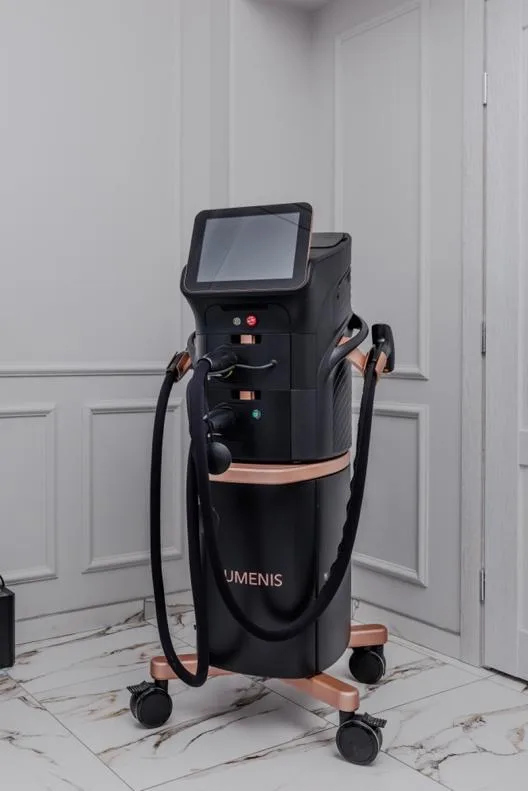
M22 Stellar Black with a range of filters for different pigment types and phototypes
Visible lightening after the very first session
No downtime — you can return to your usual routine the same day
Personal photoprotection guidance that keeps the result in place
Genevity Hardware Solutions
M22 STELLAR BLACK
A skin improvement procedure that evens out tone and reduces pigmentation.
Our Medical Team
Consultations are provided by specialists across multiple disciplines, ensuring a comprehensive approach to your health
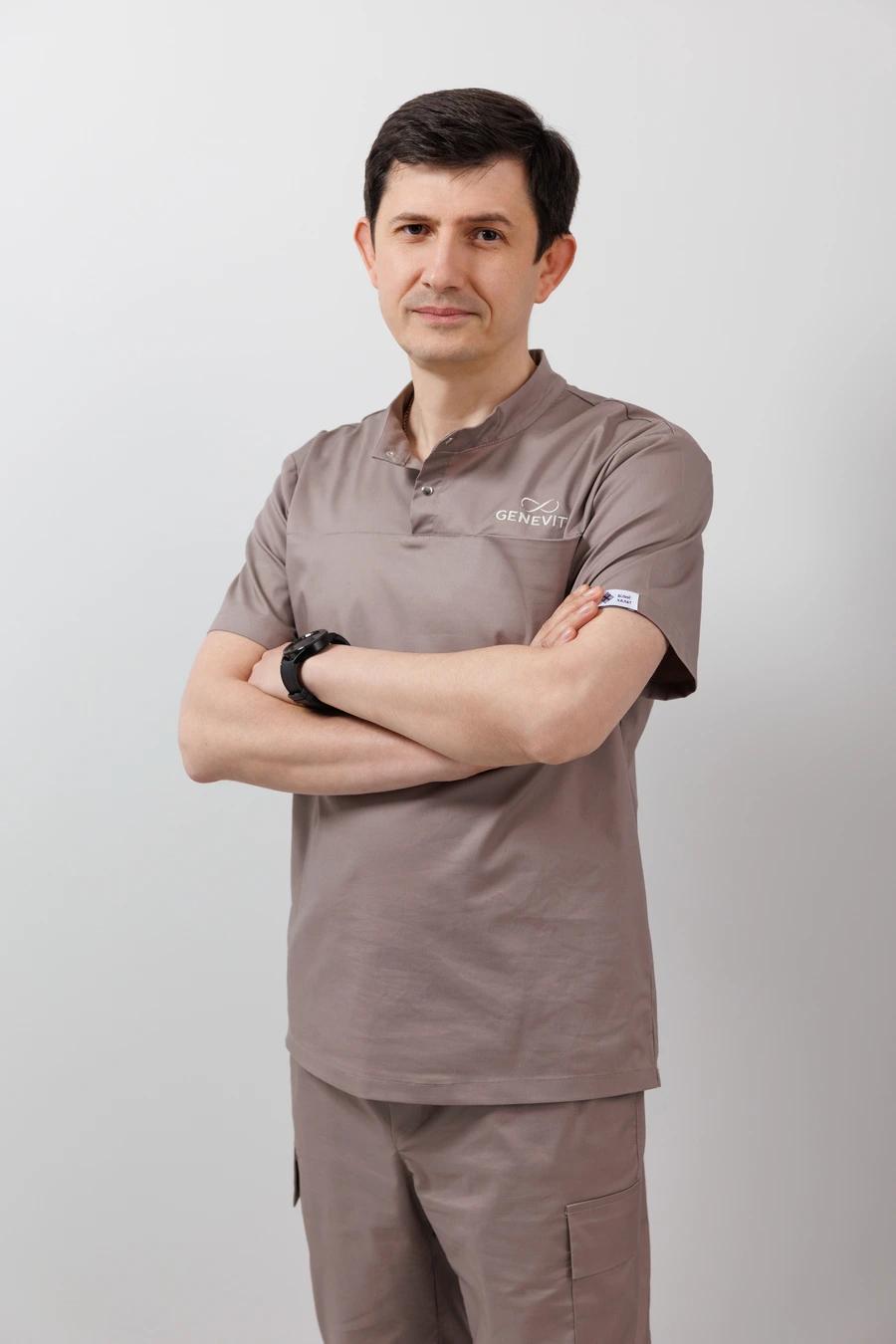
Bielianushkin Viktor Ihorovych
Branch Director, Dermatologist / Cosmetologist
Experience: 20 years
Learn More
You may also be interested in
M22 Stellar Black
M22 Stellar Black at GENEVITY - IPL + Nd:YAG for pigmentation, rosacea, and spider veins. Minimal recovery, 3-5 sessions.
from 1,600 UAH
Photorejuvenation
Photorejuvenation with the M22 Stellar Black platform at GENEVITY: correction of pigmentation, vascular lesions, and redness, with even tone and no downtime. Dnipro, medical supervision.
Laser Peel
A laser peel at GENEVITY is a gentle superficial renewal of the skin. It refreshes tone, smooths fine irregularities, and tightens pores with minimal downtime. Dnipro, Olesia Honchara street.
Photo-removal of Pigmentation
Pigmentation photo-removal at GENEVITY on the M22 Stellar Black: pulsed light selectively heats the melanin inside a spot while leaving healthy skin untouched. Solar lentigines, freckles and post-inflammatory marks fade in 2-4 sessions.
Dermatologist Consultation
A dermatology consultation at GENEVITY: diagnosis of skin conditions, dermatoscopy of moles, an analysis of what is behind your rash and a treatment plan. In person or online, Dnipro.
from UAH 950
FAQ
Superficial solar lentigines often clear in 1-2 sessions. Deeper or widespread pigmentation needs 3-4 sessions 4 weeks apart. Post-inflammatory marks fade gradually and may need to be combined with home care.
This is the expected reaction: the fragmented pigment rises towards the surface of the epidermis, so the spot darkens and forms a thin crust. It sheds on its own over 7-14 days and the skin lightens. Never pick the crusts off — that can cause new pigmentation.
Autumn and winter are the optimal seasons, when sun exposure is low. In summer the procedure is only performed if you avoid tanning entirely, use strict SPF 50, and have had no fresh tan for at least 4 weeks before the session. The doctor makes the final decision based on your phototype.
The commonest cause is ultraviolet exposure accumulated over years. Then come hormonal factors (pregnancy, contraceptives, thyroid disorders), inflammation after acne or injury, and photosensitising medication. The physician establishes the cause first — otherwise the spots return.
Melasma is a special case and aggressive treatment can worsen it. It needs a cautious approach: gentle settings, home care with brightening agents, strict photoprotection and attention to hormones. There is no one-off cure — the goal is control.
Daily SPF 50+, even in winter and cloudy weather, a hat in summer, antioxidant skincare and no solariums. If the cause is hormonal, it needs managing with an endocrinologist or gynaecologist. Without this, new spots appear even after a perfectly executed course.
Yes, and it is a common request — these areas often reveal age first. The skin is thinner and recovers more slowly, so gentler settings are used and the course may run one or two sessions longer than for the face.
Book a consultation
Our specialists will create the optimal program for you
This information is for general awareness and does not replace a doctor's consultation.