Transconjunctival Blepharoplasty in Dnipro
Transconjunctival blepharoplasty is a cosmetic operation to correct under-eye bags without any external skin incisions. The surgeon reaches the fat pads through the inner surface of the lower eyelid, which makes it possible to reduce the bulges and improve the contour of the under-eye area.
What Is Transconjunctival Blepharoplasty?
It is a type of lower blepharoplasty in which the incision is made on the side of the conjunctiva — the inner lining of the eyelid. During the operation the surgeon may remove part of the protruding fatty tissue or redistribute it to smooth the transition between the lower eyelid and the cheek. The main advantage of the method is that there is no external skin scar. However, the operation does not remove pronounced excess skin and is not suitable for every patient.
At GENEVITY — the Centre for Longevity and Quality of Life in Dnipro — aesthetic correction is approached with regard to each patient's individual features, health and safety.
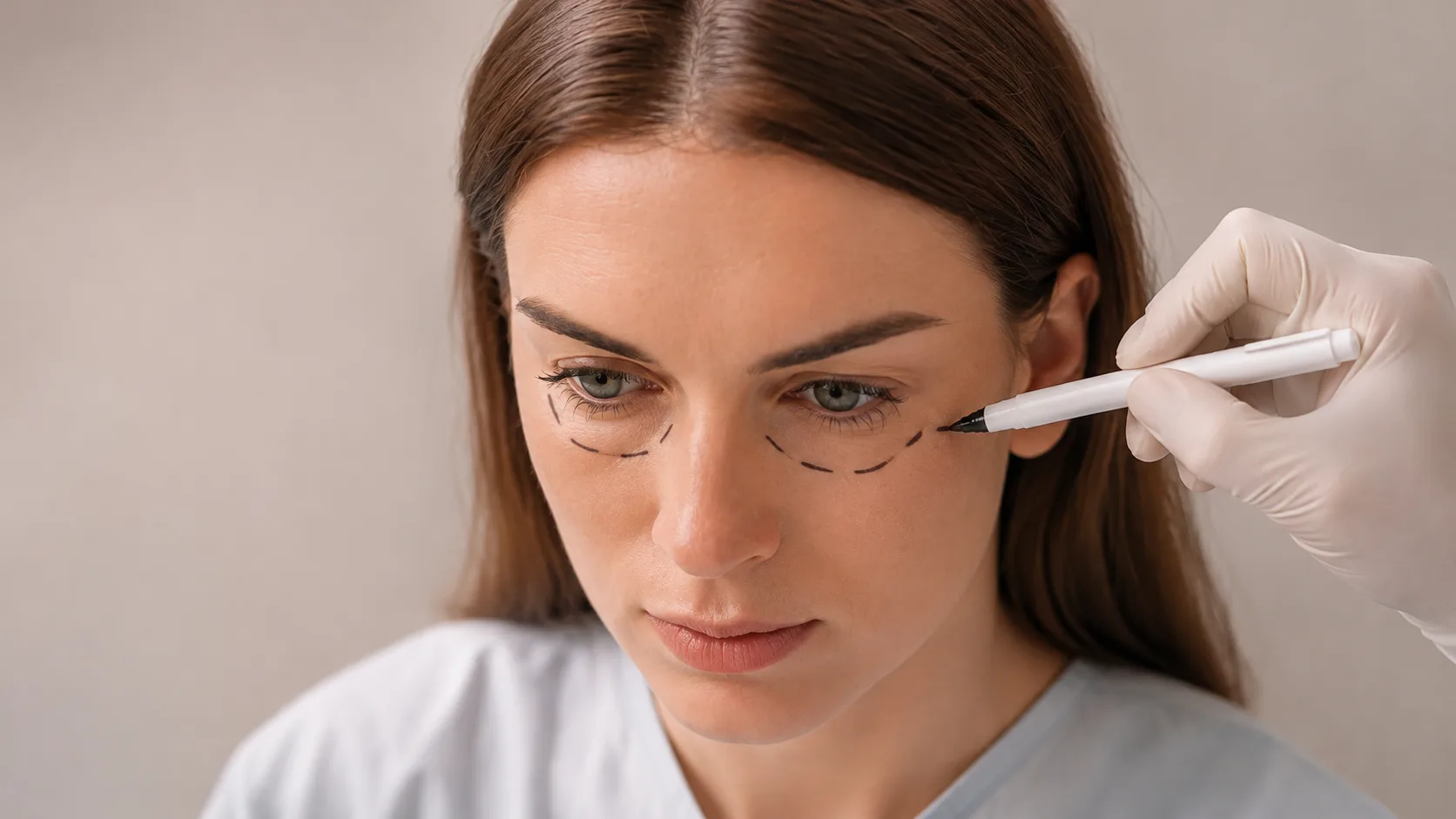
Indications for Surgery
- pronounced fat bags under the eyes;
- hereditary bulging of orbital fat;
- lower eyelid skin that has retained its elasticity;
- no significant excess skin;
- a pronounced transition between the lower eyelid and the cheek;
- certain types of fat pad asymmetry.
Contraindications and Possible Risks
- Acute infections.
- Active eye inflammation.
- Decompensated chronic conditions.
- Other conditions that raise surgical risk.
Before surgery, the cause of the puffiness must be identified. If under-eye bags are linked to swelling, allergies or illness, surgical correction of the fat may not solve the problem.
Advantages of Transconjunctival Blepharoplasty
No external incisions. Access is gained through the inner surface of the lower eyelid.
Correction of fat bags. The surgeon reduces or redistributes the protruding fatty tissue.
Skin preservation. The main approach does not require cutting the outer skin.
An individual result. The extent of correction is tailored to the patient's anatomy.
That said, the absence of an external incision does not rule out swelling, discomfort or surgical complications.
How Is the Operation Performed?
First, the plastic surgeon assesses the condition of the lower eyelids, the position of the fat pads, skin elasticity and eye function. The necessary tests are carried out before the procedure. If there are eye problems, a consultation with an appropriate specialist may be required. The length of the procedure depends on the complexity of the correction and the chosen technique. The operation is performed under a suitable type of anaesthesia and involves several stages:
Stages of the Operation
Creating access through the inner surface of the lower eyelid.
Isolating the fat pads.
Removing or redistributing the planned amount of fatty tissue.
Completing the operation and postoperative monitoring.
Recovery After Transconjunctival Blepharoplasty
In the first days after surgery there may be swelling, bruising, redness of the conjunctiva, watering eyes and moderate discomfort. Visible swelling and bruising often subside within 1–2 weeks, but full tissue recovery takes longer. The final result is assessed once the tissues have settled, sometimes after several months.
During Recovery It Is Recommended To
follow the surgeon's instructions;
avoid rubbing your eyes;
stop using contact lenses and make-up for a while;
limit physical activity;
attend follow-up appointments.
Dry eye syndrome, lower eyelid malposition and previous operations require particular attention. Possible complications include bleeding, infection, prolonged swelling, asymmetry, dry eyes, contour irregularities and a change in the position of the lower eyelid. A rare orbital haemorrhage can threaten vision. Sudden deterioration in vision or severe, worsening pain after surgery requires emergency medical care.
The Cost of Transconjunctival Blepharoplasty in Dnipro
The cost of transconjunctival blepharoplasty depends on how pronounced the fat bags are, the complexity of the operation, the need for fat redistribution, the type of anaesthesia and the extent of postoperative monitoring. The exact price is determined after a consultation and the drawing up of an individual surgical plan.
If under-eye bags concern you, book a consultation with a qualified plastic surgeon. The specialist will assess your lower eyelids, identify the cause of the changes and explain whether transconjunctival blepharoplasty is suitable in your case. Ask about the availability of the procedure, current pricing and how to book a consultation.
Our Medical Team
Consultations are provided by specialists across multiple disciplines, ensuring a comprehensive approach to your health

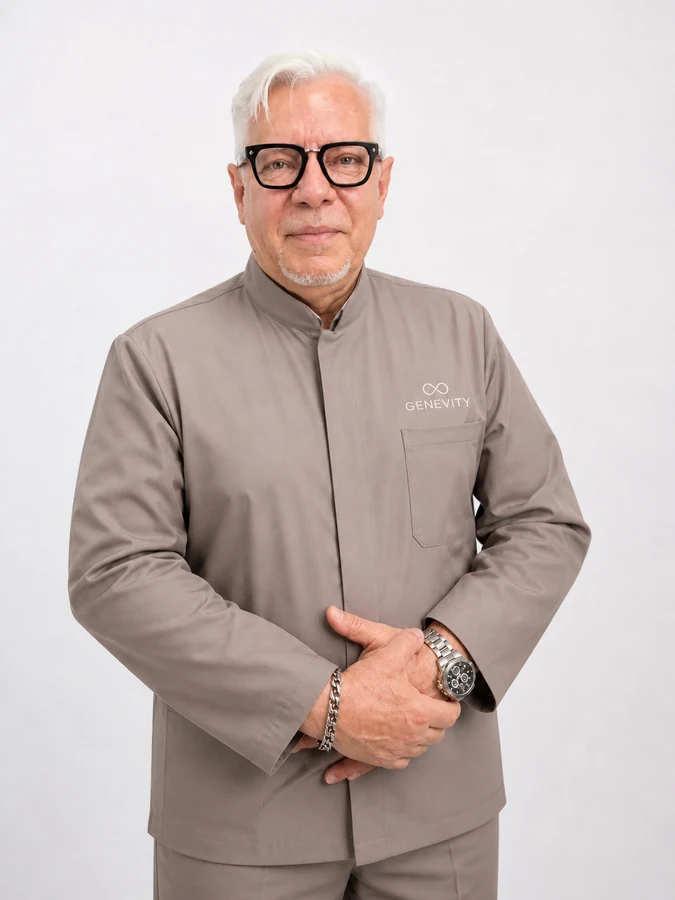
Harmash Serhii Kostiantynovych
Plastic Surgeon, Oncologist, Dermatologist
Experience: 41 years
Learn MoreYou may also be interested in
Blepharoplasty
Blepharoplasty at GENEVITY is a surgical procedure designed to correct age-related changes in the upper and lower eyelids, remove excess skin, and address protruding fat pads around the eyes. The procedure can help create a more open and refreshed appearance while preserving natural facial features. The plastic surgeon selects the most appropriate technique individually, taking into account eyelid anatomy, tissue condition, and the desired outcome.
Lower Eyelid Blepharoplasty
Lower eyelid blepharoplasty is a cosmetic operation to correct under-eye bags, fat bulges, excess skin and certain age-related changes in the lower eyelids. Depending on the patient's anatomy, the surgeon may remove or redistribute fatty tissue, correct skin folds and improve the transition between the lower eyelid and the cheek.
Circular Blepharoplasty
Circular blepharoplasty is a plastic surgery procedure for the combined correction of the upper and lower eyelids. It can remove excess skin, correct fat bulges, reduce bags under the eyes and improve the contours of the area around the eyes.
FAQ
The main approach leaves no external skin scars, because the incision is made inside the lower eyelid.
The result can last for many years, but natural age-related changes continue.
Not always. Blepharoplasty can reduce shadows cast by fat bulges, but it does not remove pigmentation or vascular features of the skin.
Where there is pronounced excess skin, the transconjunctival approach is usually not enough. The surgeon may recommend a different technique.
With an uncomplicated recovery, some patients return to non-strenuous work after a few days or one to two weeks.
Book a consultation
Our specialists will create the optimal program for you
This information is for general awareness and does not replace a doctor's consultation.