Lower Eyelid Blepharoplasty in Dnipro
Lower eyelid blepharoplasty is a cosmetic operation to correct under-eye bags, fat bulges, excess skin and certain age-related changes in the lower eyelids. Depending on the patient's anatomy, the surgeon may remove or redistribute fatty tissue, correct skin folds and improve the transition between the lower eyelid and the cheek.
What Is Lower Blepharoplasty?
Lower blepharoplasty is the surgical correction of the tissues of the lower eyelid and the adjacent area. Depending on the indications, the operation may involve removing or redistributing orbital fat, limited removal of excess skin, and reinforcing the structures that support the lower eyelid. The skin around the eyes is thin and the anatomy is complex. With age, the supporting structures of the lower eyelids can weaken and the fat pads can become more prominent. The result is bulging under the eyes, a deeper transition to the cheek and a change in the contour of the periorbital area. Under-eye bags are not always related to age, however. They can be hereditary and occur even in young people. The main aim of the operation is to improve the contour of the lower eyelids while preserving the natural shape of the eyes and their normal function.
GENEVITY — the Centre for Longevity and Quality of Life in Dnipro — treats aesthetic surgery as part of a comprehensive approach to health, appearance and individual well-being.
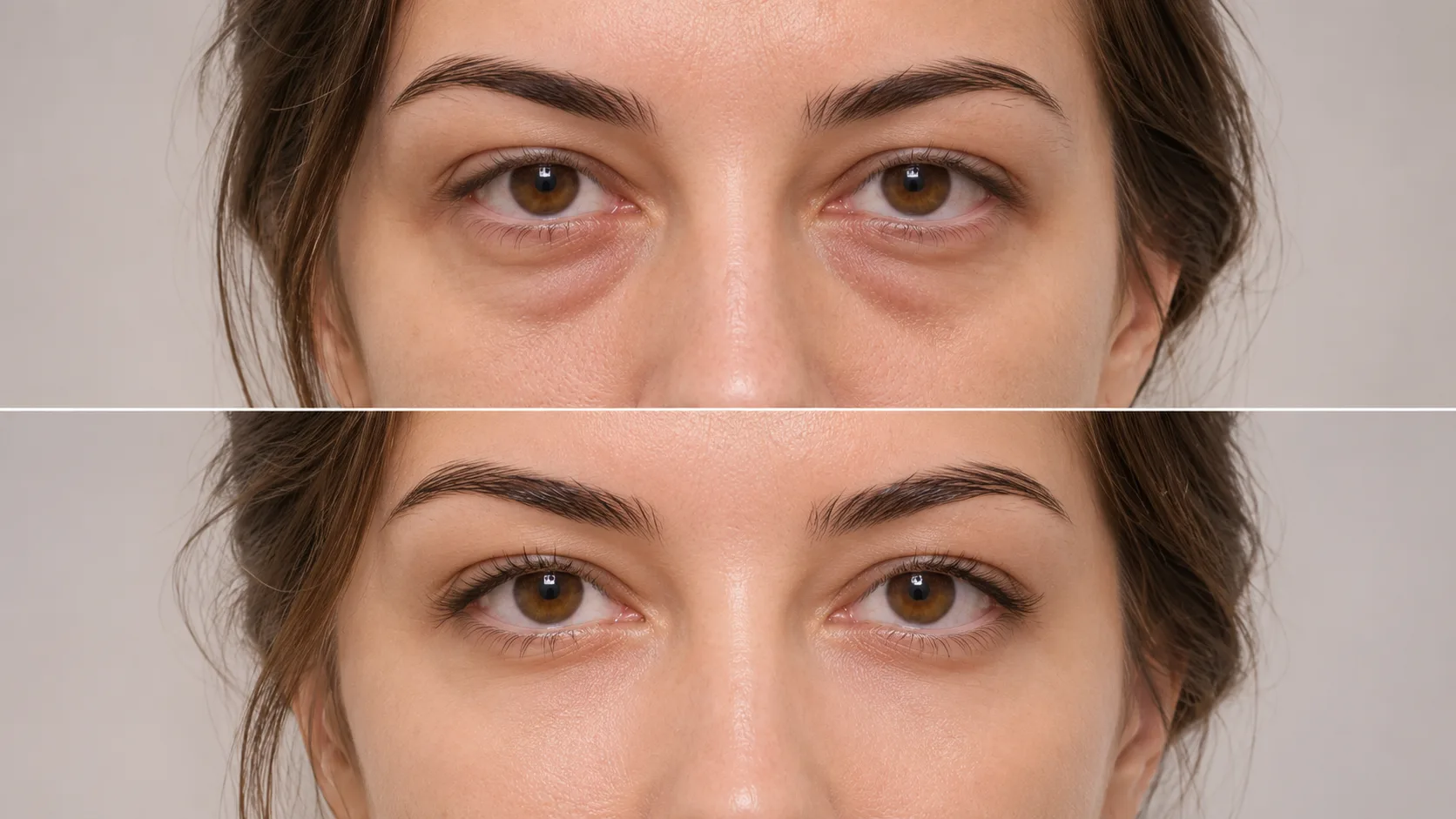
Lower blepharoplasty can correct certain anatomical changes, but it is not a universal remedy for swelling, dark circles and all wrinkles around the eyes.
Two Main Surgical Approaches
Transconjunctival — through the inner surface of the lower eyelid, with no external skin incision.
Transcutaneous — through an incision in the skin, usually placed just below the lash line.
The choice of method depends on the condition of the skin, the size of the fat bulges, the position of the lower eyelid and the characteristics of the transition between the eyelid and the cheek. In some cases the surgeon may use combined techniques.
Why Do Under-Eye Bags Appear?
Bulging of orbital fat
Fat pads around the eyes serve a protective and supporting function. With age-related changes or hereditary traits they can protrude forward, forming the characteristic bulges under the eyes. It is precisely these changes that most often become the indication for lower blepharoplasty.
Reduced skin elasticity
With age, the skin of the lower eyelids gradually loses its firmness. This can lead to fine creases, wrinkles and excess skin.
Changes in the position of facial soft tissues
Descent of the midface tissues and loss of volume in the cheekbone area can heighten the contrast between the lower eyelid and the cheek. As a result, under-eye bags look more pronounced.
Hereditary factors
In some people, fat bulges under the eyes are visible from a young age. In such cases the changes are not necessarily related to ageing or lifestyle.
Swelling
Temporary or persistent swelling can occur with allergic reactions, illnesses, sleep disturbances and other conditions. If puffiness under the eyes is mainly due to swelling, surgical fat removal may not solve the problem. That is why a diagnosis is needed before choosing a correction method.
Under-eye bags can have different causes, so it is important to identify the cause before surgery.
Indications for Lower Eyelid Blepharoplasty
- pronounced fat bags under the eyes;
- hereditary bulging of orbital fat;
- excess skin on the lower eyelids;
- age-related changes in the lower eyelid contour;
- a pronounced transition between the lower eyelid and the cheek;
- certain types of periorbital asymmetry;
- a combination of fat bulges and skin folds;
- a wish to correct persistent lower eyelid changes surgically.
Contraindications for Lower Eyelid Blepharoplasty
- acute infectious diseases;
- active inflammatory eye conditions;
- decompensated chronic conditions;
- blood clotting disorders;
- conditions that increase the risk of anaesthesia;
- significantly impaired wound healing;
- certain diseases of the ocular surface;
- other individual medical restrictions.
Whether surgery is needed is determined after an examination. If the main concern is pigmentation, vascular features of the skin or swelling, other treatments may be required.
Before surgery, the patient's general health and eye function must be assessed. Particular attention is needed for dry eye syndrome, thyroid disease affecting the eyes, eyelid malposition and previous operations. These conditions are not always absolute contraindications, but they can significantly influence the choice of technique and the safety of the procedure.
Who Is Lower Blepharoplasty Suitable For?
Lower blepharoplasty may be considered for adult patients with persistent fat bulges and other anatomical changes in the lower eyelids. Age is not the only criterion. In younger patients whose skin has retained its elasticity, a transconjunctival approach is sometimes possible. Where age-related changes are pronounced, a more comprehensive correction may be needed.
Before Surgery the Surgeon Assesses
the volume and position of the fat pads;
skin elasticity;
whether there is excess skin;
the position of the lower eyelid relative to the eyeball;
the tone of the supporting structures;
the condition of the tear film;
whether there is dry eye syndrome;
the structure of the eye sockets;
the position of the cheek tissues;
any previous surgery;
general health.
Types of Lower Eyelid Blepharoplasty
Transconjunctival lower blepharoplasty
Transconjunctival blepharoplasty is an operation in which the fat pads are reached through the inner surface of the lower eyelid. The surgeon makes an incision on the conjunctival side and then corrects the fatty tissue. There is no external skin incision. The technique is often considered for pronounced fat bulges without significant excess skin.
Classic lower blepharoplasty
Classic, or transcutaneous, blepharoplasty is performed through a skin incision below the lower lash line. Through this approach the surgeon can work with the fatty tissue and correct excess skin. Where necessary, the supporting structures of the lower eyelid are reinforced. The technique may be used when fat bulges are combined with age-related skin changes. It is important to avoid removing too much tissue, as this increases the risk of the lower eyelid being pulled down.
Fat-preserving lower blepharoplasty
Modern approaches to lower blepharoplasty do not always involve removing the protruding fat. In some cases the surgeon redistributes the fatty tissue to smooth the transition between the lower eyelid and the cheek. This can be helpful when the bulges are combined with a pronounced tear trough. The choice of method depends on the initial anatomy and the condition of the tissues.
Lower blepharoplasty with eyelid support
When the lower eyelid has lost tone, additional support may be needed. For this, canthopexy or canthoplasty — surgical methods of reinforcing or changing the fixation of the outer eyelid structures — are used in selected cases. These procedures are performed when indicated and are not a mandatory part of every lower blepharoplasty.
Advantages of the Transconjunctival Approach
no external skin scar;
the fat pads can be corrected;
the outer skin of the lower eyelid is preserved;
fatty tissue can be redistributed where indicated.
However, the transconjunctival technique does not on its own remove pronounced excess skin. If needed, the surgeon may consider additional ways of correcting skin changes.
Transconjunctival or Classic Blepharoplasty: Which Is Better?
Incision site: transconjunctival — inside the lower eyelid; classic — below the lash line.
External skin scar: transconjunctival — none; classic — possible.
Fat pad correction: transconjunctival — yes; classic — yes.
Removal of excess skin: transconjunctival — not through the main approach; classic — possible.
Additional eyelid support: transconjunctival — as indicated; classic — as indicated.
Choice of technique: transconjunctival — when the anatomy is suitable; classic — when the skin and other tissues need correcting.
There is no universally better method. Transconjunctival blepharoplasty may be a suitable option for fat bulges without pronounced excess skin. Classic lower blepharoplasty allows both the fatty tissue and the skin to be corrected at the same time, if necessary. The final decision is made by the surgeon after assessing the anatomy and the possible risks.
Can Blepharoplasty Remove Under-Eye Bags?
If under-eye bags are caused by bulging orbital fat, lower blepharoplasty can help make them less noticeable. Depending on the situation, the surgeon removes part of the fat or redistributes it. However, not all puffiness under the eyes is due to fat bags. Swelling related to allergies, illness or fluid retention requires a different approach. That is why it is important to determine before surgery which component is changing the contour of the lower eyelid.
Does Lower Blepharoplasty Remove Dark Circles?
skin pigmentation;
the pattern of blood vessels;
thin lower eyelid skin;
a pronounced tear trough;
shadows cast by fat bulges;
individual anatomical features.
If dark circles look more pronounced because of the shadow cast by under-eye bags, correcting the contour can make them less noticeable. However, the operation does not remove skin pigmentation or vascular changes. Lower blepharoplasty therefore does not guarantee that dark circles will disappear.
Lower Blepharoplasty and the Tear Trough
The tear trough is an anatomical depression where the lower eyelid meets the cheek. With age, or because of individual facial structure, it can become more noticeable. If there are fat bulges next to the trough, the contrast between the hollow and the bulge is heightened. When indicated, the surgeon may redistribute orbital fat to smooth this transition. In other cases, additional volume-restoring methods are considered. The need for such procedures is determined individually.
Benefits of Lower Blepharoplasty
Correction of fat bags
Surgical correction reduces the bulging of fatty tissue under the eyes.
Improved lower eyelid contour
Removing or redistributing fat can make the transition between the lower eyelid and the cheek smoother.
An individually chosen technique
The surgeon can choose an internal or external approach depending on the condition of the skin and soft tissues.
The option of preserving volume
With some techniques the fat is not removed completely but is used to correct hollows.
The option of combining with other operations
Where indicated, lower blepharoplasty can be combined with upper blepharoplasty or other procedures.
The operation does not, however, stop natural ageing, nor does it guarantee that all changes in the periorbital area will be fully corrected.
How Is Lower Eyelid Blepharoplasty Performed?
Consultation with a plastic surgeon
The doctor assesses the condition of the lower eyelids, the position of the fat pads, any excess skin and the characteristics of the transition between the eyelid and the cheek. Particular attention is paid to the position and tone of the lower eyelid and its ability to sit properly against the eyeball.
Eye assessment
Before surgery it is important to identify any diseases of the ocular surface and tear film disorders. If there is dry eye, previous eye surgery or other risk factors, a consultation with an ophthalmologist may be needed.
Preoperative tests
The patient undergoes the necessary investigations to assess their health and prepare for anaesthesia. The doctor asks about chronic conditions, current medication and previous procedures.
Choice of surgical technique
The surgeon decides which approach suits the correction: transconjunctival, transcutaneous or combined. If necessary, fat redistribution or lower eyelid support is planned.
Anaesthesia
The operation may be performed under local anaesthesia with sedation or under general anaesthesia. The appropriate option is chosen individually.
Surgical correction
The doctor accesses the tissues of the lower eyelid and corrects the fat pads and, where necessary, excess skin. If required, the supporting structures are reinforced.
Postoperative monitoring
After the operation, the condition of the eyelids, vision, the degree of swelling and the patient's general well-being are assessed. If recovery is uncomplicated, it is sometimes possible to go home on the day of the procedure.
How Long Does the Operation Take?
The length of lower blepharoplasty depends on the complexity of the correction, the chosen approach and any additional surgical steps. An isolated operation on both lower eyelids may take roughly one to two hours, but the actual time varies from patient to patient. If upper blepharoplasty, fat redistribution or lower eyelid support is performed at the same time, the operation may take longer.
Recovery After Lower Eyelid Blepharoplasty
Recovery after lower blepharoplasty depends on the extent of the procedure and the individual characteristics of the body.
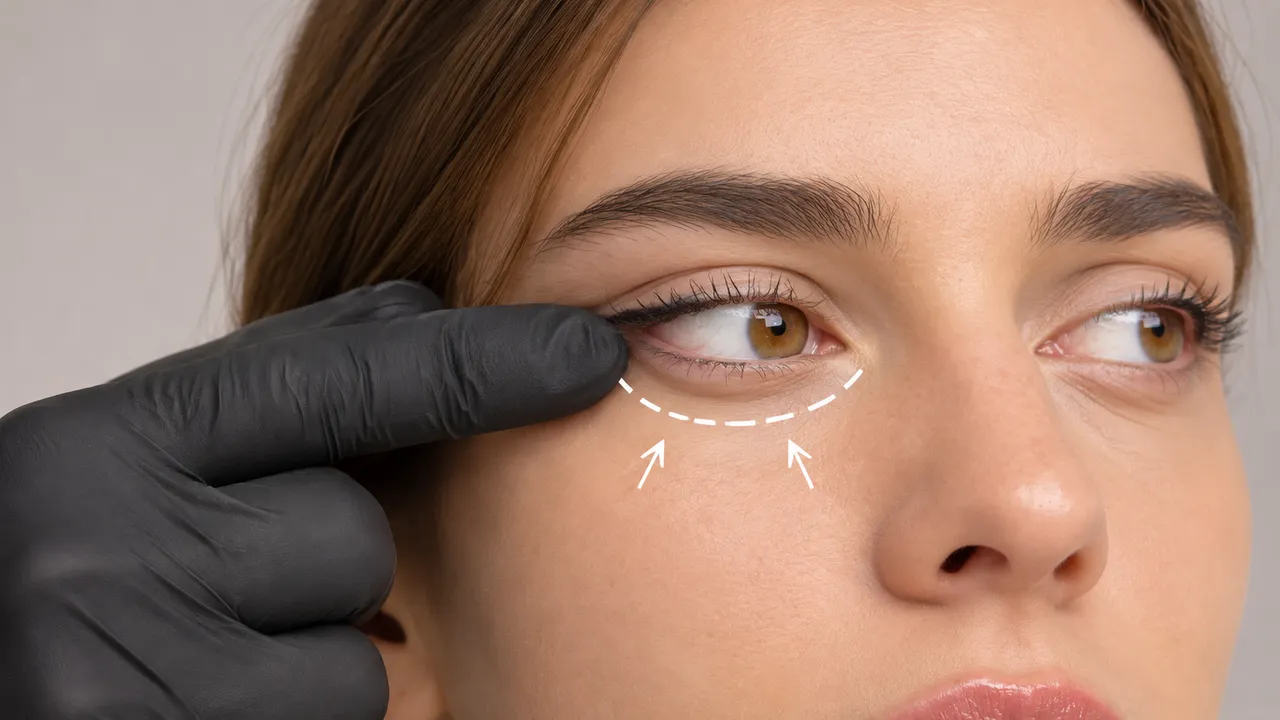
Possible in the First Few Days
swelling of the lower eyelids;
bruising around the eyes;
moderate tenderness;
a feeling of tightness in the tissues;
temporary watering of the eyes;
dryness and irritation of the eyes;
temporarily blurred vision, including from eye ointments;
changes in skin sensation;
redness of the conjunctiva.
These effects usually subside gradually. Cold compresses and other measures are used only as recommended by the doctor.
Aftercare Recommendations
follow the surgeon's instructions;
use the prescribed eye medication;
care for the operated area properly;
do not rub your eyes;
avoid strenuous physical activity;
stop wearing contact lenses for a while;
do not wear eye make-up until the doctor allows it;
protect the eye area from sun and wind;
attend follow-up appointments.
When Do Bruising and Swelling Subside?
Visible bruising and swelling often subside within the first one to two weeks. However, some residual puffiness may last longer. After a more complex correction, especially one involving tissue redistribution, recovery may take extra time.
When Can I Return to Work?
With an uncomplicated recovery, some patients return to non-strenuous work after one to two weeks. The timing depends on the degree of swelling, the type of work and the extent of the operation.
When Can I Exercise?
Strenuous exercise is usually restricted for several weeks. The surgeon will decide exactly when you can return to training.
When Are the Results of Lower Blepharoplasty Visible?
The first changes in the lower eyelid contour become visible once the early swelling subsides. In the first weeks, however, the result may look uneven as the tissues heal. Gradually the puffiness decreases and the position of the lower eyelids stabilises. The final result may take several months to assess. The effect of the operation can last a long time, but natural age-related changes continue.
Are There Scars After Lower Blepharoplasty?
Where scars are located depends on the surgical technique. In transconjunctival blepharoplasty the incision is made inside the lower eyelid, so there is no external skin scar. In classic lower blepharoplasty the incision is usually placed below the lash line. Once healed, the scar may become barely noticeable, but scarring cannot be ruled out entirely. How the scar looks depends on individual skin characteristics and the healing process.
Can the Shape of the Eyes Change After Lower Blepharoplasty?
The lower eyelid has a complex system of supporting structures. During surgical correction it is important to preserve its normal position relative to the eyeball. In some cases, temporary changes in contour are possible after surgery. However, removing too much skin or disrupting the lower eyelid's support can lead to the eyelid being pulled down, a rounding of the eye opening or eversion of the eyelid. That is why tissue tone must be assessed before surgery and a safe extent of correction determined.
Lower vs Circular Blepharoplasty: What Is the Difference?
Lower blepharoplasty corrects the lower eyelids only. Circular blepharoplasty corrects both the upper and lower eyelids in a single operation. If the patient is only concerned about under-eye bags, surgery on all the eyelids may not be necessary. If there is both hooding of the upper eyelids and pronounced change in the lower eyelids, the surgeon may consider circular blepharoplasty. The choice is made individually.
Can Lower Blepharoplasty Be Combined With Other Procedures?
Lower and upper blepharoplasty
Combining the operations allows the upper and lower eyelids to be corrected at the same time.
Lower blepharoplasty and lipofilling
Where there is marked volume loss under the eyes or in the cheekbone area, transfer of the patient's own fat is sometimes considered. However, periorbital lipofilling requires especially careful planning because of the anatomical risks.
Lower blepharoplasty and midface lift
If the changes are related to sagging of the cheek tissues, midface correction may be needed. A more extensive operation, however, affects the complexity of the procedure and the recovery.
Possible Risks and Complications
bleeding and haematoma;
infection;
impaired healing;
prolonged swelling;
asymmetry;
noticeable scarring;
changes in skin sensation;
dry and irritated eyes;
incomplete eyelid closure;
pulling down of the lower eyelid;
eversion of the lower eyelid (ectropion);
rounding of the eye opening;
contour irregularities under the eyes;
too much or too little fat removed;
an unsatisfactory aesthetic result;
the need for a further operation.
Lower blepharoplasty is a surgical operation and carries certain risks. A rare but serious complication is bleeding into the orbit, which can damage vision. If after surgery you experience a sudden deterioration in vision, severe and worsening pain, rapidly increasing swelling or marked protrusion of the eye, seek emergency medical care immediately.
Can Under-Eye Bags Be Removed Without Surgery?
Non-surgical methods can help with some causes of lower eyelid changes. If the puffiness is related to swelling, it is important to identify its cause and, where possible, eliminate it. For some changes in skin quality, cosmetic treatments may be considered. For a pronounced tear trough, volume-restoring methods are sometimes used, but injectable procedures near the eyes carry their own risks, including rare but serious vascular complications. If under-eye bags are caused by significant bulging of orbital fat, cosmetic methods usually cannot deliver a result comparable to surgical correction.
Lower Eyelid Blepharoplasty for Men
Lower blepharoplasty can be performed on both women and men. Men often have hereditary fat bulges under the eyes, and with age changes in the skin and soft tissues may also appear. When planning, the surgeon takes into account the facial structure, the position of the lower eyelids and individual aesthetic wishes. The main aim is to correct anatomical changes without needlessly altering the natural shape of the eyes.
Lower Blepharoplasty and Quality of Life
Under-eye bags and age-related changes in the lower eyelids are common features of appearance. They do not always require medical or surgical treatment. Nevertheless, some people consider blepharoplasty when these changes cause persistent aesthetic discomfort. GENEVITY — the Centre for Longevity and Quality of Life — takes an approach in which aesthetic wishes are considered together with the person's health and individual needs. When planning the operation, it is important to take into account the condition of the ocular surface, the normal function of the lower eyelids, the possible risks and how realistic the expected result is. Blepharoplasty does not halt biological ageing and has no direct effect on life expectancy.
How Much Does Lower Eyelid Blepharoplasty Cost in Dnipro?
The price of lower eyelid blepharoplasty in Dnipro depends on the complexity of the surgical correction, the chosen technique and the patient's individual characteristics. The exact cost is determined after a consultation and the drawing up of an individual surgical plan. For current prices and available techniques, contact GENEVITY — the Centre for Longevity and Quality of Life in Dnipro.
Factors That May Affect the Cost
a transconjunctival or classic approach;
the size of the fat bulges;
the need to redistribute fatty tissue;
whether there is excess skin;
the need to support the lower eyelids;
primary or revision surgery;
the type of anaesthesia;
preoperative tests;
postoperative monitoring.
If you are concerned about under-eye bags, fat bulges, excess skin or a change in the transition between the lower eyelid and the cheek, the first step should be a consultation with a qualified plastic surgeon. The specialist will assess the condition of the tissues, the position of the lower eyelids, the characteristics of the fat pads and the possible causes of the changes. After the examination, the doctor will be able to tell whether lower blepharoplasty is right for you, which surgical approach may be recommended and what limitations need to be taken into account. Ask about a consultation on lower blepharoplasty, the available surgical techniques and the conditions for the operation.
Our Medical Team
Consultations are provided by specialists across multiple disciplines, ensuring a comprehensive approach to your health

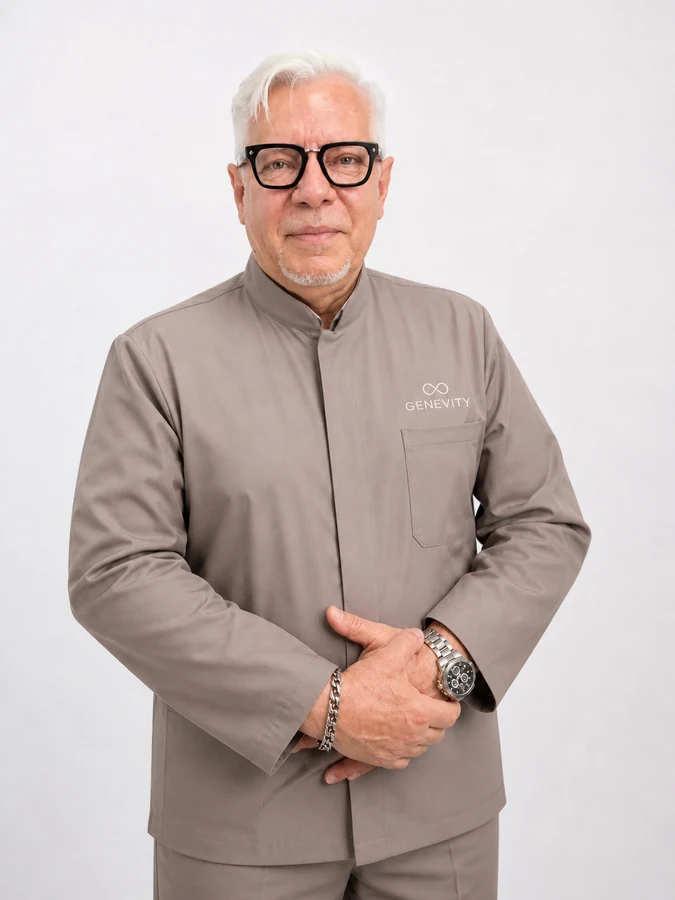
Harmash Serhii Kostiantynovych
Plastic Surgeon, Oncologist, Dermatologist
Experience: 41 years
Learn MoreYou may also be interested in
Blepharoplasty
Blepharoplasty at GENEVITY is a surgical procedure designed to correct age-related changes in the upper and lower eyelids, remove excess skin, and address protruding fat pads around the eyes. The procedure can help create a more open and refreshed appearance while preserving natural facial features. The plastic surgeon selects the most appropriate technique individually, taking into account eyelid anatomy, tissue condition, and the desired outcome.
Transconjunctival Blepharoplasty
Transconjunctival blepharoplasty is a cosmetic operation to correct under-eye bags without any external skin incisions. The surgeon reaches the fat pads through the inner surface of the lower eyelid, which makes it possible to reduce the bulges and improve the contour of the under-eye area.
Circular Blepharoplasty
Circular blepharoplasty is a plastic surgery procedure for the combined correction of the upper and lower eyelids. It can remove excess skin, correct fat bulges, reduce bags under the eyes and improve the contours of the area around the eyes.
FAQ
It is a surgical operation to correct fat bulges, excess skin and certain changes in the contour of the lower eyelids.
The operation can reduce fat bulges for a long time, but it does not stop age-related changes or rule out new aesthetic concerns.
In the transconjunctival technique the incision is made inside the lower eyelid, with no external skin scar. The classic operation uses a skin incision below the lashes, which also allows excess skin to be corrected.
The method is chosen individually. For fat bulges without excess skin, the transconjunctival technique may be suitable. Pronounced skin changes may require other methods.
Yes, if there are indications. Hereditary fat bags can appear long before any pronounced age-related changes.
Not always. If dark circles are caused by shadows from fat bulges, correcting the contour can improve their appearance. The operation does not remove pigmentation or vascular features.
With the transconjunctival approach there is no external skin scar. The classic technique leaves a scar below the lash line, which may be barely noticeable once healed.
Anaesthesia is used during the operation. Afterwards there may be moderate tenderness, swelling and a feeling of tightness.
It depends on the chosen technique and the extent of the correction. An isolated operation may take roughly one to two hours, but the actual time varies.
With an uncomplicated recovery, some patients return to non-strenuous work after one to two weeks.
Make-up is allowed once healing is sufficient and the surgeon has given permission.
Contact lenses are usually restricted in the early postoperative period. The doctor will decide when you can start wearing them again.
Yes, a change in the position of the lower eyelid is one of the possible risks. That is why the supporting structures must be carefully assessed before surgery.
Yes, where indicated, circular blepharoplasty is possible — correction of the upper and lower eyelids at the same time.
The result can last for many years, but how long depends on individual characteristics and natural age-related changes.
In some cases a repeat operation is possible, but it requires careful assessment of scarring, skin condition, eyelid position and the risk of complications.
Book a consultation
Our specialists will create the optimal program for you
This information is for general awareness and does not replace a doctor's consultation.