Endoscopic Facelift in Dnipro
An endoscopic facelift is a modern plastic surgery technique for correcting age-related changes using endoscopic equipment. During the operation the surgeon works through small incisions, using a miniature camera for visual control and specialised instruments to reposition and secure the soft tissues.
What Is an Endoscopic Facelift?
An endoscopic facelift is a surgical technique in which the surgeon uses an endoscope: a thin instrument with a camera that transmits a magnified image of the operative area to a monitor. This makes it possible to visualise the anatomical structures and correct the tissues through small incisions. Unlike traditional open approaches, in endoscopic operations on the forehead and midface the incisions are often placed within the scalp or in the temporal region. Through these access points the surgeon releases and repositions certain soft tissues, then secures them in the planned position. An endoscopic lift is a full surgical operation, not a cosmetic treatment. It requires anaesthesia, preparation and postoperative recovery. At the same time, the term "endoscopic facelift" covers a range of different procedures. What can be achieved depends on the area being corrected, the patient's anatomy and the surgical technique.
GENEVITY — the Centre for Longevity and Quality of Life in Dnipro — views aesthetic correction as part of a comprehensive approach to a person's health, appearance and individual wellbeing.
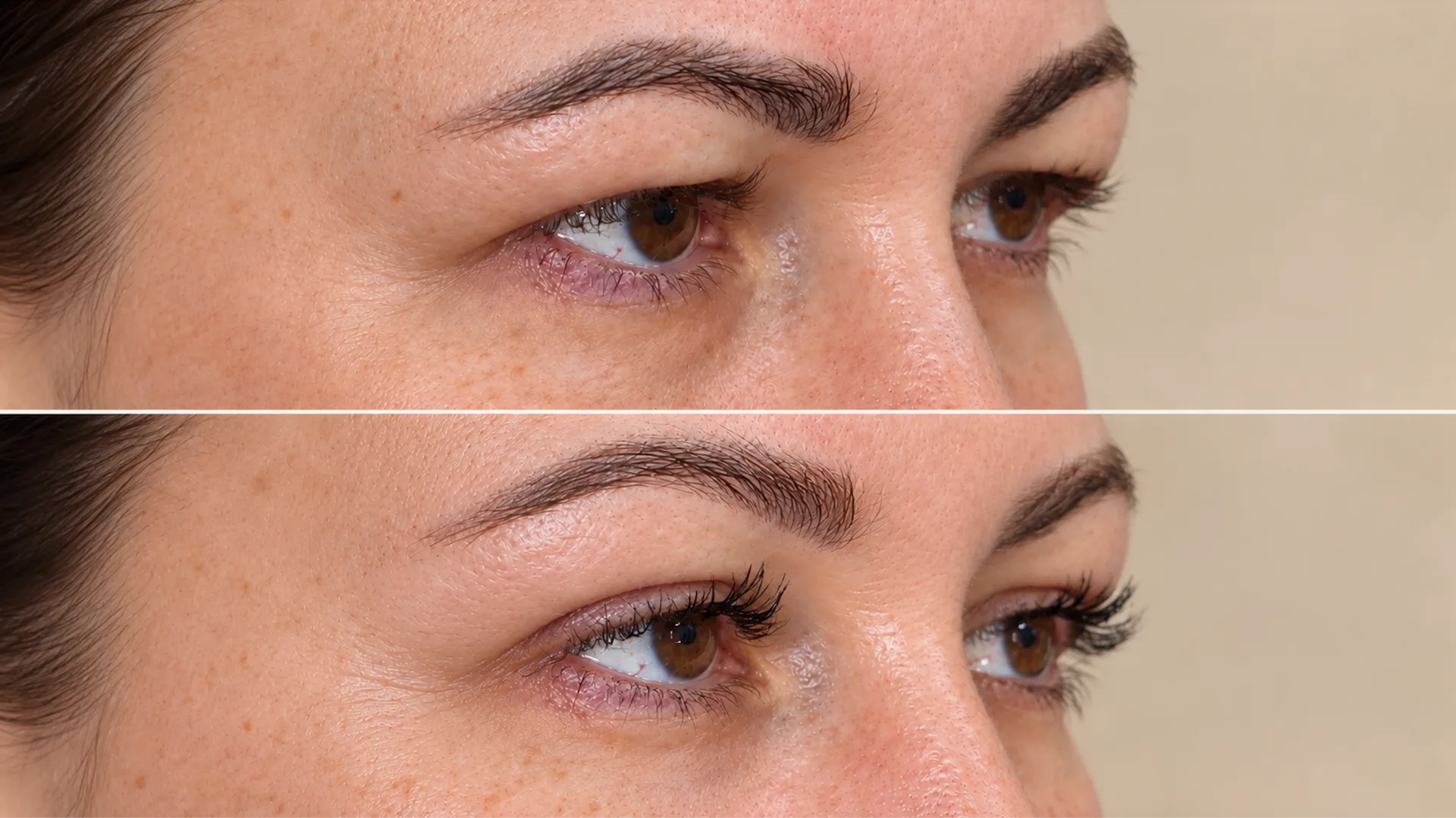
An endoscopic facelift allows certain types of surgical correction to be performed through relatively small access points. However, the method does not suit every patient: where there is pronounced excess skin of the lower face and neck, other types of lift may be required. The aim of the operation is to improve the position of the soft tissues while preserving the natural features of the face.
Which Areas Can Be Corrected Endoscopically?
Endoscopic techniques are used in several areas of aesthetic facial surgery. The method is most often used to lift the forehead, brows, temples and midface. It can help correct tissue descent, change the position of the brows, improve the contours of the cheekbone area and reduce some signs of ageing.
Endoscopic Forehead Lift
An endoscopic forehead lift aims to correct descent of the tissues of the upper third of the face. The operation can change the position of the brows, reduce the feeling of heaviness in the upper eyelids and correct some forehead lines. The surgeon works through small incisions that are usually placed within the scalp.
Endoscopic Brow Lift
A brow lift is used when the brows have descended with age or changed position. Depending on the anatomy, the central or the outer part of the brow can be corrected. It is important to take into account natural facial expression, forehead height and individual facial proportions. Raising the brows too far can create an unnatural expression, so the extent of correction must be carefully planned.
Endoscopic Temporal Lift
A temporal lift mainly targets the outer part of the brows and the adjacent soft tissues. It may be considered when the lateral brows have descended and for certain changes in the periorbital area. It does not replace a full lift of the lower face or neck.
Endoscopic Midface Lift
An endoscopic midface lift aims to reposition the soft tissues of the cheeks and cheekbone area. With age these tissues may descend, and the transition between the lower eyelid and the cheek becomes more pronounced. Where indicated, the operation can change the position of the cheekbone tissues and improve the contours of the midface.
Combined Endoscopic Lift
In some cases the surgeon may combine correction of the forehead, brows and midface. The extent of the operation is determined individually, taking into account the condition of the tissues, the degree of age-related change and the possible risks.
When Is an Endoscopic Facelift Recommended?
- descent of the brows;
- a change in the position of the outer corners of the brows;
- age-related changes of the forehead;
- lowered position of the soft tissues over the cheekbones;
- flattening of the upper cheeks;
- a more pronounced transition between the lower eyelid and the cheek;
- moderate descent of the midface tissues;
- a wish to correct age-related changes surgically.
Contraindications to an Endoscopic Facelift
- acute infectious diseases;
- decompensated chronic conditions;
- blood clotting disorders;
- conditions that increase the risk of anaesthesia;
- significantly impaired wound healing;
- other individual medical restrictions.
Wrinkles on their own are not always an indication for surgery. If the main concern is skin quality, pigmentation or fine superficial lines, other methods may be more appropriate.
Who Is a Candidate for an Endoscopic Facelift?
Suitable candidates may be patients with descent of the upper or middle third of the face who do not have pronounced excess skin requiring removal. Age is not the only criterion for choosing a method. Anatomical features and the nature of the changes matter. Where there is marked sagging of the lower face, visible jowls and changes in the neck, an endoscopic lift of the upper face may not address the main aesthetic concern.
When Planning the Operation, the Surgeon Assesses
the degree of soft-tissue descent;
skin elasticity;
the structure of the forehead and cheekbones;
the position of the brows;
the condition of the upper and lower eyelids;
the degree of age-related change;
any previous operations;
general health;
the patient's expectations.
Advantages of an Endoscopic Facelift
Some types of endoscopic lift use short incisions, often placed within the scalp.
The endoscope's camera transmits a magnified image of the tissues to a monitor, helping the surgeon navigate the anatomical structures.
The operation does not simply tighten the skin; it also repositions certain deeper structures.
Where indicated, an endoscopic lift can be combined with blepharoplasty, facial fat grafting and other procedures.
The method allows the extent of correction to be tailored to the features of the face.
Small incisions do not, however, mean an absence of scars, pain or surgical risk.
Endoscopic Facelift vs Classic Facelift: What Is the Difference?
An endoscopic lift and a traditional facelift address partly different concerns. The endoscopic lift is particularly in demand for correcting the forehead, brows and midface. A classic facelift more often targets age-related changes of the lower face, the jawline and, where needed, the neck. In a traditional lift the surgeon may work with the skin and the deeper tissues, including the superficial musculoaponeurotic system (SMAS).
The Main Differences
Main areas — endoscopic lift: forehead, brows, midface; classic facelift: lower face, facial contour, neck.
Access — endoscopic lift: small incisions, often within the scalp; classic facelift: incisions usually around the ears and along the hairline.
Main goal — endoscopic lift: repositioning certain soft tissues; classic facelift: correcting tissue descent and excess skin.
Excess skin — endoscopic lift: limited scope for removal; classic facelift: substantial excess can be removed.
Recovery — endoscopic lift: depends on the extent of the internal correction; classic facelift: depends on the technique and extent of the operation.
Some modern surgical techniques also allow endoscopic visualisation to be used when working on the lower face. However, these procedures differ from a standard endoscopic forehead or midface lift and are not a universal substitute for a classic facelift.
Endoscopic Facelift or SMAS Lift?
The choice between an endoscopic lift and a SMAS lift depends on where the age-related changes are located. If the main concern is descent of the brows and the cheekbone tissues, the surgeon may consider the endoscopic technique. If jowls, loss of jawline definition and marked sagging of the lower face predominate, a SMAS lift or another type of facelift may be needed. Sometimes different techniques are combined to correct several areas. The final decision is made after an in-person examination.
How Is an Endoscopic Facelift Performed?
Consultation with a Plastic Surgeon
During the consultation the surgeon assesses the skin, the position of the soft tissues, facial expression, symmetry and the anatomical features of the face. The desired changes, the limitations of the technique, possible scars and surgical risks are discussed.
Preoperative Preparation
Before the procedure, investigations are carried out to assess general health. Depending on medical indications, blood tests, instrumental investigations and a consultation with an anaesthetist may be arranged. Particular attention is paid to conditions that affect circulation and wound healing, and to medications that may increase the risk of bleeding.
Anaesthesia
An endoscopic lift may be performed under general anaesthesia or with other forms of anaesthetic care. The choice depends on the extent of the procedure and the patient's condition.
Surgical Access
The surgeon makes small incisions in predetermined areas. For a forehead lift they are usually placed within the scalp. For midface correction the location of the access points may differ.
Repositioning and Securing the Tissues
The endoscope and specialised instruments are introduced through the access points. Under visual control the surgeon performs the necessary manipulations of the soft tissues, repositions them and secures them in the planned position.
Completing the Operation
The incisions are closed with surgical sutures or other suitable means. After the procedure the patient remains under medical observation. Whether a hospital stay is needed depends on the extent of the operation, the type of anaesthesia and the patient's condition.
Recovery After an Endoscopic Facelift
Recovery depends on the area corrected, the complexity of the procedure and individual characteristics. After an endoscopic midface lift, swelling may be particularly noticeable in the cheeks and lower eyelids.
In the First Days After Surgery You May Experience
swelling of the forehead, eyelids or cheeks;
bruising;
a feeling of tightness in the tissues;
temporary numbness;
discomfort around the incisions;
headache;
temporary changes in scalp sensation.
Aftercare Recommendations
follow your plastic surgeon's instructions;
care for the surgical wounds as instructed;
sleep with your head elevated, if advised;
avoid strenuous physical activity;
temporarily avoid saunas and other treatments involving significant heat;
do not massage the treated areas without your surgeon's approval;
avoid pressure on the areas where the tissues were secured;
attend your follow-up appointments.
How Long Does Recovery Take?
Visible bruising and swelling often subside within the first two to three weeks. After a limited endoscopic forehead lift, some patients can return to light everyday activities sooner. After more extensive midface correction, recovery may take longer. Strenuous exercise is usually restricted for several weeks, and residual swelling and altered sensation may persist for several months. The timing of a return to work and sport is determined individually.
When Can the Results of an Endoscopic Lift Be Seen?
The first changes in tissue position may be visible soon after surgery, but in the early period the result is distorted by swelling. As recovery progresses, the contours become better defined. The final result is assessed once swelling has subsided and the tissues have settled, which may take several months. How long the effect lasts varies and depends on age, skin condition, anatomy, the chosen technique and the natural ageing process. An endoscopic lift does not stop facial ageing, so the position and condition of the tissues will continue to change over time.
Does an Endoscopic Lift Leave Scars?
Yes. Despite the small incisions, an endoscopic lift is a surgical operation and leaves scars. For forehead and brow correction the incisions are often placed within the scalp, so the marks of surgery may be less noticeable. In some cases, however, visible scarring, a change in the hairline or localised hair loss around the access points may occur. The location and number of incisions should be discussed with your surgeon before the operation.
Can an Endoscopic Lift Be Combined with Other Procedures?
In some cases combined approaches may be used to achieve a balanced aesthetic result. A brow lift can be combined with eyelid surgery when brow descent and excess eyelid skin are both present. It is important to correctly identify the cause of upper eyelid hooding. Fat grafting is used to restore soft-tissue volume. If age-related changes involve not only tissue descent but also volume loss, the surgeon may consider combining techniques. Where several areas are affected, endoscopic correction of the upper face can be combined with other types of facelift. However, a larger operation is more complex and may affect the length of recovery.
Before surgery, your health must be assessed and any factors that increase surgical risk ruled out. Smoking, uncontrolled high blood pressure and certain medications can increase the risk of complications and require separate assessment. With pronounced excess skin or particular anatomical features, the endoscopic method may be unsuitable even in the absence of general contraindications.
Possible Risks and Complications
bleeding and haematoma;
infection;
seroma (a collection of fluid);
impaired healing;
asymmetry;
under- or over-correction;
changes in skin sensation;
injury to branches of the facial nerve with temporary or permanent impairment of movement;
localised hair loss around the incisions;
noticeable scars;
a change in the hairline;
prolonged swelling;
an unsatisfactory aesthetic result;
the need for a further operation.
In rare cases, complications related to anaesthesia and blood clot formation may occur. Before the procedure the patient should receive detailed information about their individual risks and possible alternatives.
An Endoscopic Facelift Without Surgery: Is It Possible?
A true endoscopic lift is always a surgical procedure. Injectable, device-based and thread treatments are not endoscopic lifts.
For Certain Aesthetic Concerns, Options May Include
botulinum toxin injections to correct individual expression lines;
fillers to restore tissue volume;
device-based treatments for certain changes in skin quality;
other cosmetic methods where indicated.
However, these treatments do not reposition tissue in the way a surgical lift does. The choice of method depends on what exactly needs to be corrected: wrinkles, volume loss, skin quality or soft-tissue descent.
Endoscopic Facelift and Quality of Life
Age-related changes in the face are a natural process and do not require aesthetic correction. Nevertheless, some people consider plastic surgery if a change in the position of the brows, cheeks or other tissues causes them persistent aesthetic discomfort. GENEVITY — the Centre for Longevity and Quality of Life — considers questions of appearance in the context of overall health, individual wellbeing and informed choice. When planning an endoscopic lift, it is important to consider medical safety, a natural-looking result, the course of recovery and realistic expectations. The operation does not directly affect life expectancy and does not stop biological ageing. Its purpose is the surgical correction of specific age-related changes in appearance.
How Much Does an Endoscopic Facelift Cost in Dnipro?
The price of an endoscopic facelift in Dnipro depends on the extent of the operation, the area being corrected and the individual surgical plan.
Factors That May Affect the Cost
a forehead, brow or midface lift;
the need to correct several areas;
the complexity of the surgery;
the use of additional techniques;
the type of anaesthesia;
preoperative investigations;
the need for a hospital stay;
postoperative follow-up.
The exact cost is determined after a consultation with a plastic surgeon and agreement on the surgical plan. For current prices and the correction methods available, contact GENEVITY — the Centre for Longevity and Quality of Life in Dnipro. If you are considering an endoscopic forehead, brow or midface lift, the first step should be a consultation with a qualified plastic surgeon. The specialist will assess your skin, the position of the soft tissues, your facial expression and facial proportions. After the examination the surgeon will be able to explain whether the endoscopic method suits your aesthetic goal, what results are possible and what limitations need to be considered. Ask about a consultation on endoscopic facelift, the techniques available and the conditions of the operation.
Our Medical Team
Consultations are provided by specialists across multiple disciplines, ensuring a comprehensive approach to your health
Harmash Serhii Kostiantynovych
Plastic Surgeon, Oncologist, Dermatologist
Experience: 41 years
Learn MoreYou may also be interested in
Facelift Surgery
Facelift surgery (rhytidectomy) at GENEVITY is a surgical procedure designed to correct age-related changes in the face and neck, restore facial definition, remove excess skin, and address sagging soft tissues. The plastic surgeon selects the most appropriate surgical technique individually, taking into account facial anatomy, tissue condition, and the desired outcome.
Endoscopic Plastic Surgery
Endoscopic plastic surgery is a modern field of aesthetic medicine that allows age-related changes in the face to be corrected using specialised surgical instruments and endoscopic equipment. The technique is used to lift and reposition soft tissues through small incisions which, in certain cases, can be placed in inconspicuous areas.
Blepharoplasty
Blepharoplasty at GENEVITY is a surgical procedure designed to correct age-related changes in the upper and lower eyelids, remove excess skin, and address protruding fat pads around the eyes. The procedure can help create a more open and refreshed appearance while preserving natural facial features. The plastic surgeon selects the most appropriate technique individually, taking into account eyelid anatomy, tissue condition, and the desired outcome.
FAQ
It is a surgical technique for correcting the position of the soft tissues using an endoscope, an instrument with a camera. It is most often used to lift the forehead, brows and midface.
The main difference lies in the surgical access and the use of endoscopic visualisation. The techniques also differ in the areas they treat: an endoscopic lift is more often used for the upper and middle face, and a classic facelift for the lower face and neck.
There is no single age threshold. The decision depends on the degree of change, the condition of the tissues, health and individual indications.
A standard endoscopic forehead or midface lift is not designed to fully correct pronounced jowls. Other surgical techniques may be needed for the lower face.
Yes, an endoscopic midface lift can be used to change the position of the soft tissues over the cheekbones where indicated.
Yes, small scars remain. With some techniques the incisions are placed within the scalp, which makes them less noticeable.
Anaesthesia is used during the operation. Afterwards, tenderness, swelling, tightness and temporary numbness are possible.
The duration depends on the area being corrected and the complexity of the procedure. An isolated brow lift usually takes less time than combined correction of several areas.
After a limited procedure, a return to light work is sometimes possible after one to two weeks. After a more extensive operation, recovery may take longer.
The result may last for several years, but the exact duration varies. Natural ageing continues after the operation.
Yes, in some cases the two operations are combined. The decision is made after assessing the brow position, the condition of the eyelids and the overall surgical risk.
Yes, the technique can be used in men where indicated. Planning takes into account anatomical features, the hairline and the natural position of the brows.
It depends on where the age-related changes are. For brow descent and certain midface changes the endoscopic method may be considered. Where the facial contour and neck have changed significantly, other types of facelift are more often considered.
Book a consultation
Our specialists will create the optimal program for you
This information is for general awareness and does not replace a doctor's consultation.