Belly Button Surgery in Dnipro
Belly button surgery, or umbilicoplasty, is a surgical procedure to change the shape, size, or outer contour of the navel. It may be performed for congenital anatomical features, or after pregnancy, major weight loss, injury, or previous surgery.
What Is Umbilicoplasty?
Umbilicoplasty is a plastic surgery procedure to correct the appearance of the navel. The navel is a scar that forms after birth where the umbilical cord was attached. Its shape, depth, size, and position can vary considerably. In some people the navel is a small vertical hollow; in others it is round or protruding. Such differences are most often natural anatomical variations. Over time the appearance of the navel can change as a result of skin stretching, weight fluctuations, pregnancy, and surgery. The appearance of the navel depends on the structure of the skin and subcutaneous fat, how the tissue scars, and the condition of the anterior abdominal wall. Umbilicoplasty can change the shape or size of the umbilical hollow, correct certain scar changes, and improve the aesthetic proportions of the central abdomen.
GENEVITY — the Centre for Longevity and Quality of Life in Dnipro — approaches aesthetic correction as part of a comprehensive approach to a person's health, appearance, and individual wellbeing. The main aim of the procedure is to create a harmonious navel contour that suits the individual anatomy, skin characteristics, and proportions of the anterior abdominal wall.
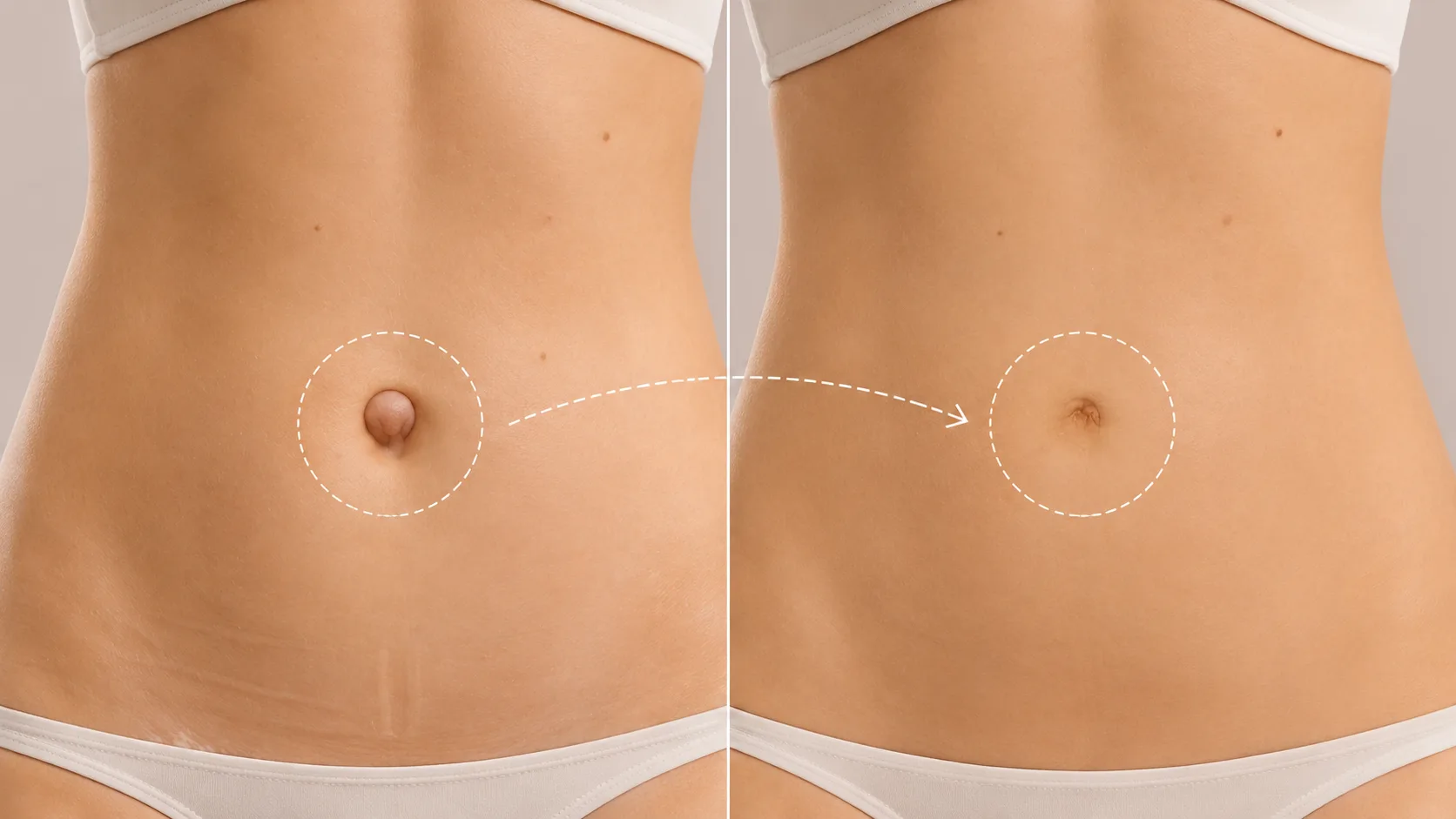
Modern plastic surgery techniques can correct a protruding, stretched, asymmetrical, or deformed navel. Where needed, umbilicoplasty can be combined with other operations to correct the contours of the abdomen. At the same time, belly button surgery is not a necessary procedure when the navel simply has a natural variation in shape.
Why Does the Shape of the Navel Change?
Pregnancy and Childbirth
During pregnancy the abdominal skin stretches and the navel may become flatter or protrude. After childbirth its shape often gradually recovers, but sometimes the changes persist.
Major Weight Loss
After weight loss, excess skin may appear and skin tension may change. This can affect the shape and position of the umbilical hollow.
Age-Related Changes
With age the skin gradually loses elasticity, which can change the appearance of the navel.
Congenital Features
The shape of the navel is individual from birth. In some people it is markedly protruding, asymmetrical, or unusually shaped.
Effects of Previous Surgery
After laparoscopic procedures, abdominoplasty, and other abdominal operations, the shape of the navel may change because of tissue scarring.
Umbilical Hernia
Sometimes a bulge at the navel is caused by an umbilical hernia rather than by the skin itself. In that case a diagnostic assessment is needed. Cosmetic umbilicoplasty is not a substitute for surgical treatment of a hernia.
When May Belly Button Surgery Be Recommended?
- marked asymmetry of the navel;
- a stretched or altered umbilical hollow;
- excess skin around the navel;
- scar deformity after surgery;
- changes in appearance after pregnancy;
- changes in shape after major weight loss;
- a wish to correct a protruding navel;
- certain after-effects of injury.
Contraindications for Belly Button Surgery
- acute infectious diseases;
- active inflammation in the navel area;
- blood clotting disorders;
- decompensated chronic conditions;
- conditions that increase anaesthetic risk;
- impaired tissue healing;
- other individual medical restrictions.
Before surgical correction, your health must be assessed and any factors that increase the risk of complications ruled out. If the navel protrudes because of a hernia, a treatment plan for the hernia defect must be established first.
What Types of Belly Button Surgery Are There?
Navel Reshaping
The operation changes the outer contour of the umbilical hollow. Depending on the anatomy, the surgeon may correct excess skin, reshape the folds, or redistribute the tissues.
Navel Reduction
When the umbilical opening is large or stretched, surgical reduction of its visible size may be considered. The aim is to create a more compact contour.
Correction of a Protruding Navel
A protruding navel may be a natural feature, but it is sometimes linked to a hernia or other conditions. If the protrusion is due to soft tissue alone, aesthetic correction is possible. If a hernia is present, a separate surgical treatment plan is required.
Navel Reconstruction
Reconstructive umbilicoplasty may be performed for marked scar deformity or after operations that have altered the anatomy of the umbilical area. In some cases a new umbilical hollow needs to be created.
Revision Umbilicoplasty
If a previous operation has left asymmetry, a coarse scar, or an unsatisfactory shape, revision surgery may be considered. Such operations require a particularly careful assessment of the tissues and their blood supply.
The correction method depends on the original shape of the navel and the nature of the changes.
Belly Button Surgery After Pregnancy
Pregnancy brings significant changes to the anterior abdominal wall. As the abdomen grows, the skin stretches and the navel may change shape, becoming wider or protruding. After childbirth some of these changes gradually lessen on their own. In some women, however, a stretched umbilical hollow, excess skin, or an altered contour remains. If the aesthetic changes persist, umbilicoplasty may be considered.
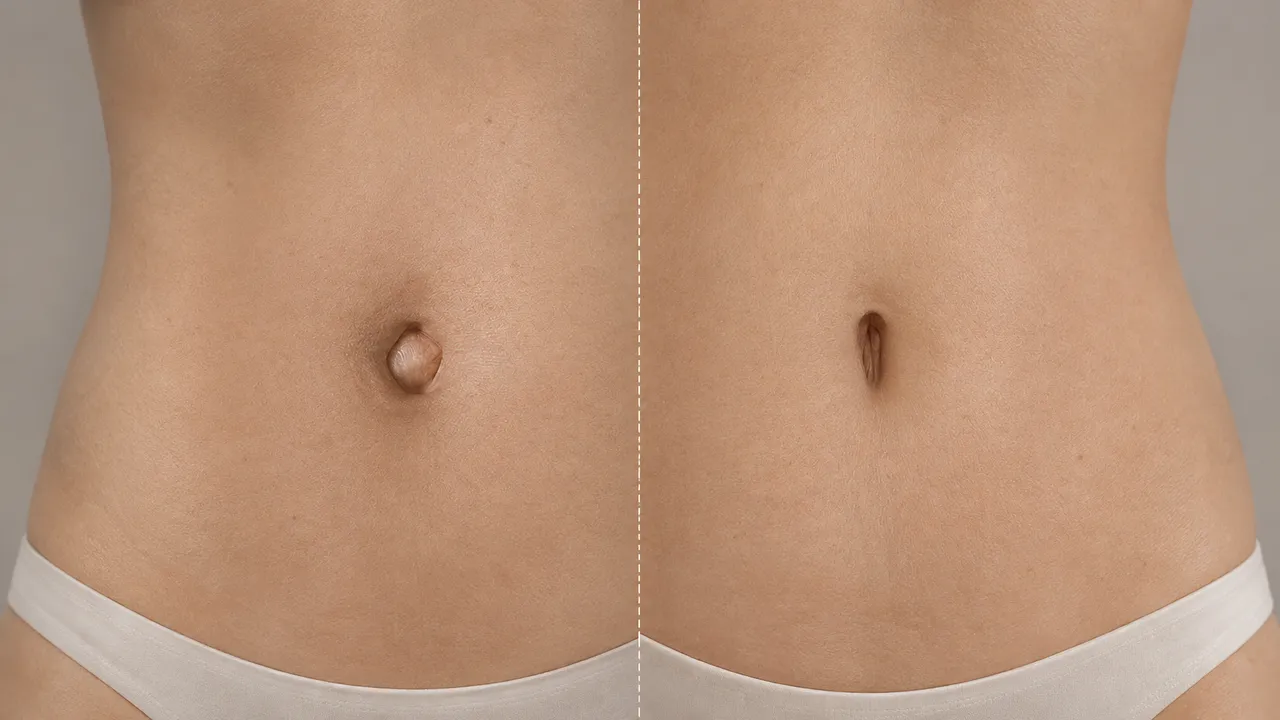
Before surgery, the condition of the anterior abdominal wall must be assessed, an umbilical hernia ruled out, and it must be established whether there is significant excess abdominal skin that calls for a different approach. If you are planning another pregnancy, discuss this with the surgeon, as renewed stretching of the tissues may change the result.
Belly Button Surgery After Weight Loss
After significant weight loss, the abdominal skin does not always fully retract. Excess skin can form folds around the navel and change its appearance. In some cases a local correction of the umbilical area is enough. If there is significant excess skin on the abdomen, the doctor may consider a more comprehensive operation. The choice of method depends on the extent of the changes, the stability of body weight, and the condition of the tissues.
Umbilicoplasty is not a weight-loss method and does not correct pronounced sagging of the skin across the whole abdomen.
Belly Button Surgery vs Abdominoplasty: What Is the Difference?
Umbilicoplasty and abdominoplasty are different surgical procedures. Umbilicoplasty mainly changes the shape or size of the navel. Abdominoplasty corrects excess skin and fat on the abdomen and, where needed, restores certain structures of the anterior abdominal wall. A full abdominoplasty often requires creating a new skin opening for the navel and securing it in the right position. Such extensive surgery is usually not needed for a local navel correction. If the changes affect not only the navel but a large part of the abdomen, the surgeon assesses whether a comprehensive correction is appropriate.
Benefits of Belly Button Surgery
Reshaping
The operation changes the outer contour of the navel in keeping with the individual anatomy.
Less Marked Asymmetry
Surgical correction can make the shape more balanced, although perfect symmetry is not guaranteed.
Correction of Scar Changes
In some cases the appearance of tissue after previous surgery or injury can be improved.
An Individual Result
The technique is chosen according to skin condition, the shape of the abdomen, and the patient's wishes.
Can Be Combined With Other Operations
Where indicated, navel correction can be performed at the same time as an abdominoplasty or reconstructive surgery.
It is important to bear in mind that the operation carries a risk of scarring, impaired healing, and other complications.
How Is Belly Button Surgery Performed?
Consultation With a Plastic Surgeon
At the initial consultation the doctor assesses the shape of the navel, the surrounding skin, any scars, and the anterior abdominal wall. The specialist clarifies the patient's wishes and discusses possible correction methods. If an umbilical hernia is suspected, further investigations and a consultation with a general surgeon may be needed.
Preoperative Assessment
Before surgery, the necessary health assessment is carried out. The extent of the investigations depends on the complexity of the procedure, your medical history, and the planned anaesthesia.
Planning the Correction
The surgeon decides where the incisions will be placed, how much the tissue will be altered, and the intended shape of the umbilical hollow. The patient is told where scars may lie and what limitations the chosen technique has.
The Operation
Depending on the extent of surgery, local anaesthesia, sedation, or general anaesthesia may be used. The surgeon makes the planned incisions, corrects the skin and soft tissues, shapes the required contour, and closes the wound with sutures. The surgical technique depends on the original anatomy and the goals of the correction.
Postoperative Monitoring
After the procedure the doctor assesses the tissues and gives advice on caring for the operated area. After small, isolated operations it is sometimes possible to go home the same day. When combined with abdominoplasty, recovery is usually longer.
Recovery After Belly Button Surgery
Recovery after umbilicoplasty depends on the extent of the operation and the individual patient. Afterwards, mild soreness, swelling, minor bruising, and a feeling of tissue tightness are possible. After a local correction, recovery is usually shorter than after extensive abdominal surgery.
Recommendations After Surgery
follow the surgeon's instructions;
care for the surgical wound properly;
keep the navel area clean as advised;
avoid friction and pressure on the operated area;
temporarily limit strenuous physical activity;
avoid swimming pools and saunas until your doctor allows;
do not remove scabs or sutures yourself;
attend follow-up appointments.
How Long Does Recovery Take?
After a limited umbilicoplasty, many patients can gradually return to light everyday activities within a few days. However, physical exertion and abdominal exercises may be restricted for several weeks. If belly button surgery is performed together with an abdominoplasty, recovery takes longer. The final aesthetic result is assessed once the swelling has subsided and the scar tissue has matured.
Does Umbilicoplasty Leave Scars?
Any operation involving incisions can leave scars. With some techniques the surgeon tries to place the incisions inside the umbilical hollow or along its natural contour. This can make the scars less noticeable, but it is impossible to rule them out completely. How visible the scarring is depends on individual skin characteristics, the surgical technique, and the healing process. Some patients may develop hypertrophic or keloid scars.
That is why the placement of future incisions and any possible changes in the appearance of the navel should be discussed before surgery.
Possible Risks and Complications
Umbilicoplasty is a surgical procedure and may be accompanied by complications. With more extensive procedures, the risks of anaesthesia and thromboembolic complications are also taken into account.
Possible risks include:
bleeding;
haematoma;
infection;
wound dehiscence;
impaired healing;
asymmetry;
noticeable scarring;
altered skin sensation;
narrowing or deformity of the umbilical hollow;
impaired tissue blood supply;
an unsatisfactory aesthetic result;
the need for revision surgery.
Before surgery the doctor should explain the possible consequences and the alternative correction methods.
Can the Shape of the Navel Be Changed Without Surgery?
The options for non-surgical correction are limited. If the change in navel shape is due to temporary skin stretching after pregnancy, its appearance may gradually change as the tissues recover. With significant fluctuations in body weight, the contour of the umbilical area may also change. However, exercise, massage, and cosmetic treatments cannot reliably change the established anatomical shape of the navel.
If a protruding navel is caused by a hernia, attempting to push it back in yourself or to correct it cosmetically can be dangerous. In such cases a medical diagnosis is required.
Belly Button Surgery and Quality of Life
The navel is a small anatomical area, but its appearance can influence how the proportions of the abdomen are perceived. At the same time, a wide variety of navel shapes and sizes is normal. There is no single required aesthetic standard. Some people consider surgical correction after pregnancy, weight loss, or previous surgery. GENEVITY — the Centre for Longevity and Quality of Life — takes an approach in which aesthetic wishes are considered together with a person's health and individual needs. The decision to have umbilicoplasty should be voluntary and well informed. It is important to consider the expected changes, possible scars, what recovery involves, and the surgical risks. Belly button surgery does not directly affect life expectancy and is not a necessary medical procedure when the navel simply has a natural variation in shape.
How Much Does Belly Button Surgery Cost in Dnipro?
The price of belly button surgery in Dnipro depends on the complexity of the correction, the surgical technique chosen, and the individual patient.
The cost may depend on:
the nature of the navel deformity;
the extent of surgery;
the need for scar correction;
whether it is a primary or revision operation;
the type of anaesthesia;
preoperative investigations;
combination with other surgical procedures;
postoperative monitoring.
The exact cost is determined after a consultation and once an individual surgical plan has been drawn up. If you are concerned about the shape, size, or appearance of your navel after pregnancy, weight loss, or previous surgery, the first step should be a consultation with a qualified plastic surgeon. The specialist will assess the tissues, rule out possible medical causes of the changes, and discuss surgical correction options. Ask about an umbilicoplasty consultation, the correction methods available, and the conditions for surgery. Book a consultation to find out more about what belly button surgery can do for you.
Our Medical Team
Consultations are provided by specialists across multiple disciplines, ensuring a comprehensive approach to your health


Harmash Serhii Kostiantynovych
Plastic Surgeon, Oncologist, Dermatologist
Experience: 41 years
Learn MoreYou may also be interested in
Abdominoplasty
Abdominoplasty at GENEVITY is the surgical correction of the abdominal wall: removal of excess skin and fat and, where indicated, repair of separated abdominal muscles. It addresses what diet, exercise and liposuction cannot, and is planned at a stable weight.
Diastasis Correction
Diastasis correction at GENEVITY is the surgical repair of separation of the rectus abdominis muscles, which most often arises after pregnancy. The operation restores the abdominal wall and resolves the bulge that persists even at a normal weight and with regular exercise.
Contouring After Weight Loss
Body contouring after weight loss at GENEVITY removes the excess skin left behind by substantial weight loss. The operation completes work the patient has already done: it removes the folds of skin and fat that do not retract on their own and do not reduce with exercise.
FAQ
Umbilicoplasty is a surgical operation to change the shape, size, or outer contour of the navel.
Yes, with certain anatomical features surgical correction can change the shape of the umbilical hollow. What the operation can achieve is determined after an examination.
Where indicated, the visible size of the navel can be reduced surgically. The method depends on the structure of the tissues.
In some cases, yes. However, an umbilical hernia must first be ruled out, as it requires a separate medical assessment.
Yes, the operation may be considered once the main postpartum recovery is complete, if the changes in shape persist and cause aesthetic discomfort.
Yes, surgical incisions leave scars. With some techniques they lie inside the umbilical hollow and can be barely noticeable.
Anaesthesia is used during the operation. Afterwards, soreness, swelling, and a feeling of tissue tightness are possible.
The length depends on the complexity of the correction. An isolated umbilicoplasty usually takes less time than an operation combined with abdominoplasty.
The surgeon decides when you can return to physical activity. After a local correction the restrictions may be shorter than after comprehensive abdominal surgery.
Yes, navel correction is often part of a full abdominoplasty. However, whether the two should be combined is decided individually.
The result can last a long time, but significant changes in body weight, pregnancy, and natural ageing can affect the appearance of the tissues.
If an umbilical hernia is found, the surgeon determines whether and in what order it needs to be treated. Reconstructive surgery can sometimes be combined with aesthetic correction, but this requires separate planning.
Book a consultation
Our specialists will create the optimal program for you
This information is for general awareness and does not replace a doctor's consultation.