Monsplasty in Dnipro
Monsplasty is a surgical procedure to correct the shape, volume, and position of the soft tissues of the pubic area (mons pubis). It may be used for excess fatty tissue, skin laxity after weight loss, age-related changes, or individual anatomical features.
What Is Monsplasty?
Monsplasty is the surgical correction of the soft tissues lying over the pubic bone. The pubic area is a natural mound formed mainly of subcutaneous fat and skin. Its shape and volume are individual and can change over the course of life. After pregnancy, major weight loss, age-related changes, or weight fluctuations, excess skin, a pronounced fat deposit, or sagging tissue sometimes develops in this area. Monsplasty may aim to reduce volume, tighten the skin, and create a smoother contour of the lower abdomen and pubic area.
GENEVITY — the Centre for Longevity and Quality of Life in Dnipro — approaches aesthetic medicine as part of a comprehensive approach to a person's health, appearance, and everyday comfort. The main aim of monsplasty is to change the contours of the pubic area in keeping with the individual proportions of the body and the requirements of medical safety.
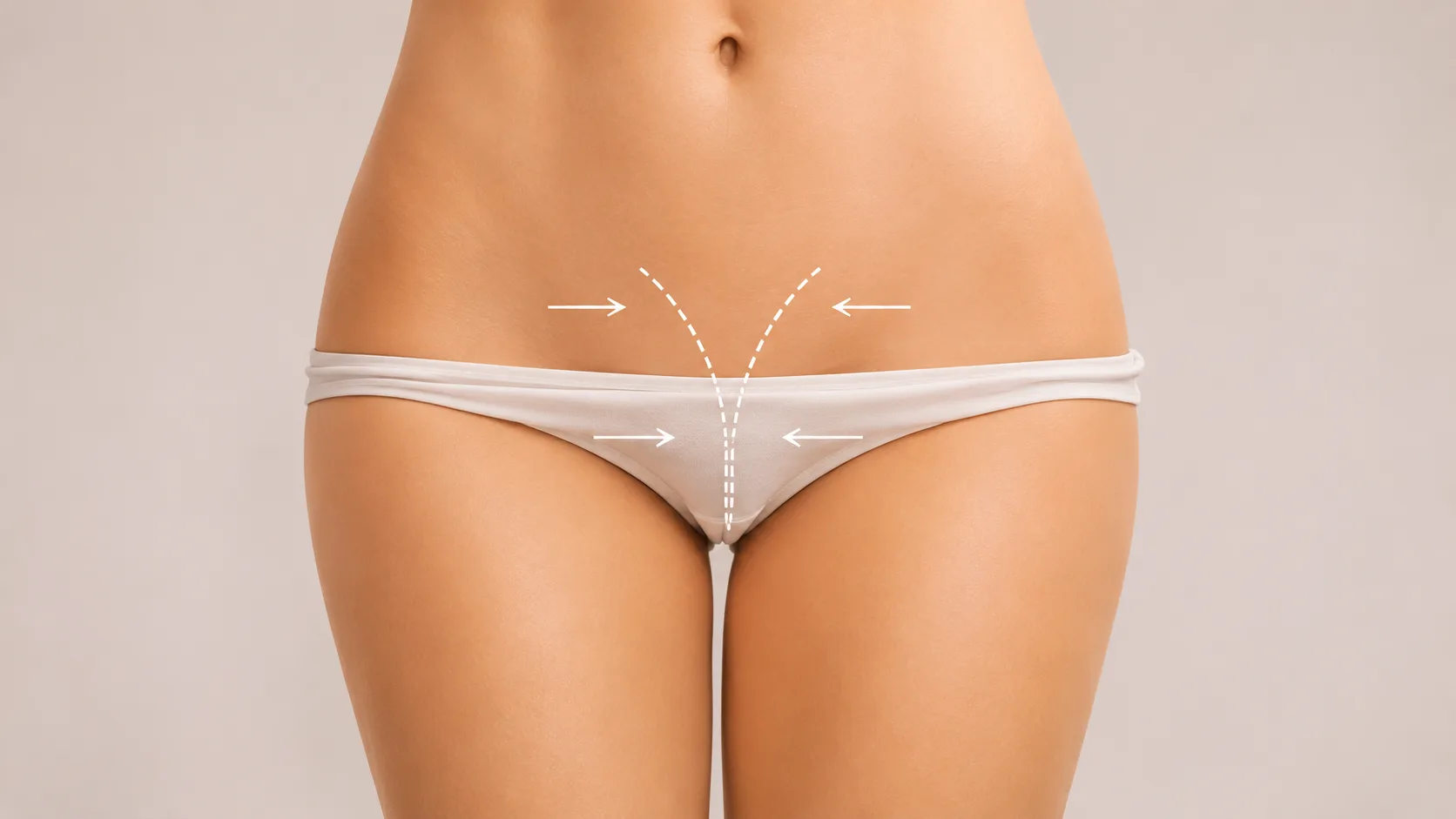
Modern correction of the pubic area may involve liposuction, a surgical tissue lift, or a combination of techniques. The choice of procedure depends on skin condition, the amount of subcutaneous fat, anatomy, and the patient's wishes. The operation is not necessary when the area simply reflects natural anatomy. The decision to proceed is made individually after a consultation with a specialist.
Why Does the Shape of the Pubic Area Change?
Age-Related Changes
With age the skin gradually loses elasticity, which can change the position and contour of the soft tissues.
Major Weight Loss
After weight loss the volume of subcutaneous fat decreases, but stretched skin does not always fully retract. Folds and sagging may result.
Pregnancy and Childbirth
Pregnancy brings changes to the tissues of the anterior abdominal wall and lower abdomen. After childbirth, changes in the shape of the pubic area sometimes persist.
Localised Fat Deposits
In some people the fatty tissue of the pubic area is more pronounced than in neighbouring areas. This may be linked to heredity and individual fat distribution.
Effects of Previous Surgery
After certain lower abdominal operations, including caesarean section, scar changes sometimes affect the contour of the adjacent tissues.
The appearance of the pubic area depends on the distribution of subcutaneous fat, skin elasticity, the characteristics of the connective tissue, and the structure of the lower abdomen. Not every change in shape requires surgery. It is important to identify the cause and assess the possible ways of correcting it.
When May Monsplasty Be Recommended?
- excess fatty tissue in the pubic area;
- skin laxity after significant weight loss;
- pronounced skin folds;
- a change in the contour of the lower abdomen;
- discomfort when wearing close-fitting clothing;
- difficulty with hygiene because of excess tissue;
- chafing of the skin during movement;
- changes in tissue shape after pregnancy;
- a personal wish to correct the appearance of the pubic area.
Contraindications for Monsplasty
- acute infectious diseases;
- blood clotting disorders;
- decompensated chronic conditions;
- conditions that increase anaesthetic risk;
- active inflammation in the treatment area;
- other individual medical restrictions.
Before surgery the doctor assesses skin condition, the amount of fatty tissue, the position of skin folds, and the patient's general health. General health must be evaluated and any factors that increase surgical risk ruled out. The decision on whether surgery is possible is made after the assessment.
What Monsplasty Techniques Are There?
Pubic Liposuction
Liposuction of the pubic area reduces localised subcutaneous fat. During the procedure the surgeon inserts special instruments through small access points and removes a planned amount of fat. The technique may be considered when there is a pronounced fat deposit and reasonably good skin elasticity. If the skin is markedly stretched and sagging, liposuction alone may not be enough.
Mons Lift
A lift of the pubic area is used when the skin is excessive and has descended. During the operation the surgeon removes some of the excess tissue and repositions it to create a smoother contour. The placement of the incision depends on the chosen technique and the patient's anatomy.
Mons Reduction
Mons reduction may involve removing fatty tissue, excess skin, or a combination of the two. The main aim is to reduce a prominent volume and correct the proportions of the lower abdomen.
Combined Monsplasty
When localised fat deposits are combined with skin laxity, a combined procedure may be needed. In some cases correction of the pubic area is performed at the same time as an abdominoplasty (tummy tuck). Whether the operations can be combined is decided after assessing the surgical risks.
The choice of surgical technique depends on which changes need to be corrected.
How Does Pubic Liposuction Differ From Monsplasty?
Liposuction and monsplasty with skin removal address different problems. Pubic liposuction mainly reduces the volume of subcutaneous fat. It may be suitable if the skin is still able to retract after fat removal. A mons lift removes excess skin and corrects the position of the soft tissues. If the main problem is sagging tissue after major weight loss, removing fat without a lift may not give the desired result. Where the changes are pronounced and complex, the doctor may recommend combining the methods.
Benefits of Monsplasty
Volume Correction
Surgical methods can reduce a localised fat deposit or excess tissue.
Improved Body Contours
Correcting the pubic area can create a smoother transition from the lower abdomen to the intimate area.
Removal of Excess Skin
A lift removes some of the stretched skin that will not retract on its own.
Less Everyday Discomfort
Where folds are pronounced, reducing the excess tissue can make hygiene easier and reduce friction.
Individual Planning
The surgical method is chosen according to the patient's anatomy, tissue condition, and expectations.
Bear in mind that surgical correction involves a recovery period, possible scarring, and a risk of complications.
Monsplasty After Weight Loss
Significant weight loss can leave excess skin on the abdomen, thighs, and pubic area. Even once weight has stabilised, the tissues do not always return to their previous state. In some cases the skin of the pubic area forms a fold that alters the contour of the lower abdomen and may cause discomfort. Monsplasty after weight loss removes some of the excess tissue and corrects its position. Before surgery it is advisable to reach a stable weight and have your nutritional status assessed, especially if the weight loss followed bariatric surgery.
Monsplasty is not a treatment for obesity or a method of weight loss.
Monsplasty After Pregnancy and Childbirth
During pregnancy the tissues of the lower abdomen stretch and the distribution of fat may change. After childbirth some of the changes gradually lessen on their own. Sometimes, however, excess skin, a localised fat deposit, or a change in the contour of the pubic area remains. If the changes are pronounced, surgical correction may be considered.
Before surgery is planned, the main postpartum recovery should be complete and the condition of the tissues assessed. If a woman is planning another pregnancy, this should also be discussed with the surgeon, as later changes in weight and skin stretching may affect the result.
How Is Monsplasty Performed?
Specialist Consultation
At the consultation the doctor assesses skin condition, the amount of fatty tissue, the degree of sagging, and the lower abdomen. The patient's wishes, possible correction methods, and the expected results are discussed.
Preoperative Assessment
The necessary investigations are arranged before the procedure. Their extent depends on your health, the surgical technique chosen, and the type of anaesthesia.
Preparing for Surgery
The surgeon defines the area to be corrected, the placement of the incisions, and how much tissue is expected to be removed. The patient receives advice on preparation, including medication and avoiding smoking.
The Surgical Correction
The operation is performed with appropriate anaesthesia. With liposuction, some of the subcutaneous fat is removed through small surgical access points. With a lift, the surgeon removes excess skin and, where needed, fatty tissue, then secures the tissues in their new position. The length of the procedure depends on the chosen technique and the complexity of the operation.
Postoperative Monitoring
After the operation the patient remains under medical supervision. The doctor monitors the early postoperative period and gives recovery advice.
Recovery After Monsplasty
How long recovery takes depends on the extent of surgery. After the operation, swelling, bruising, soreness, a feeling of tissue tightness, and temporary changes in sensation are possible. In the first days, excessive pressure and friction on the treated area must be avoided.
Recommendations After Surgery
follow the surgeon's instructions;
keep the operated area clean;
wear loose clothing that does not press on the tissues;
wear a compression garment if prescribed;
limit strenuous physical activity;
avoid movements that put tension on the sutures;
abstain from sexual activity for the period recommended by your doctor;
attend follow-up appointments.
How Long Does Recovery Take?
After a limited procedure, a return to light everyday activities may be possible within one to two weeks. After a more extensive lift, recovery takes longer. Strenuous physical activity is usually restricted for several weeks, and the surgeon decides when sexual activity can be resumed, depending on healing. Swelling may last beyond the early recovery period. The final contour is assessed once the tissues have settled.
Does Monsplasty Leave Scars?
Surgical correction may leave scars. Liposuction leaves small marks at the access points. A lift of the pubic area may require a longer incision, because excess skin has to be removed. Where the scar lies depends on the technique chosen; it may follow natural skin creases or sit in the lower abdomen. Over time scars usually become less noticeable, but they do not disappear completely. Their appearance depends on individual healing and aftercare.
Possible Risks and Complications
Like any surgical procedure, monsplasty carries certain risks. With more extensive procedures, the risks associated with anaesthesia and thromboembolic complications are also taken into account.
Possible complications:
bleeding;
haematoma;
seroma (a collection of fluid);
infection;
wound dehiscence;
prolonged swelling;
altered skin sensation;
asymmetry;
noticeable scarring;
an unsatisfactory aesthetic result;
the need for revision surgery.
Before surgery the doctor should explain the possible consequences and alternatives in detail.
Can the Pubic Area Be Reduced Without Surgery?
What non-surgical correction can achieve depends on the cause of the increased volume. If the prominence of the pubic area is due to excess body fat in general, weight loss may help reduce its volume. However, fat distribution is individual, so a reduction in any particular area cannot be guaranteed. Exercise strengthens the muscles and helps maintain overall fitness, but it cannot target fat in the pubic area alone. With a pronounced excess of stretched skin, non-surgical methods usually cannot achieve a result comparable to a surgical lift.
The choice of correction method should be based on an examination and medical indications.
Monsplasty and Quality of Life
Changes in the shape of the pubic area may be a natural feature of a person's build or may follow pregnancy, weight loss, and ageing. Such changes are not a disease in themselves and do not have to be corrected. In some cases excess tissue causes chafing, makes hygiene harder, or affects comfort during physical activity. GENEVITY — the Centre for Longevity and Quality of Life — considers aesthetic wishes in the context of overall health and individual wellbeing. When discussing surgical correction, it is important to consider not only the desired appearance but also the functional condition of the tissues, the possible risks, and the patient's expectations. The decision to have monsplasty should be voluntary, well informed, and made after receiving full medical information.
How Much Does Monsplasty Cost in Dnipro?
The price of monsplasty in Dnipro depends on the correction method chosen, the extent of surgery, and the individual patient.
The cost may depend on:
liposuction or a surgical lift;
the amount of fat to be removed;
the extent of excess skin;
the need for a combined operation;
the type of anaesthesia;
preoperative investigations;
postoperative monitoring.
The exact cost is determined after a consultation and once an individual surgical plan has been drawn up. If you are concerned about excess fat, skin laxity, or a change in the contour of the pubic area, the first step should be a consultation with a qualified specialist. The doctor will help assess your anatomy, identify possible correction methods, and discuss the expected results, limitations, and risks of surgery. Ask about a monsplasty consultation, the correction methods available, and the conditions for surgery. Book a consultation to find out more about what monsplasty can do for you.
Our Medical Team
Consultations are provided by specialists across multiple disciplines, ensuring a comprehensive approach to your health


Harmash Serhii Kostiantynovych
Plastic Surgeon, Oncologist, Dermatologist
Experience: 41 years
Learn MoreYou may also be interested in
Abdominoplasty
Abdominoplasty at GENEVITY is the surgical correction of the abdominal wall: removal of excess skin and fat and, where indicated, repair of separated abdominal muscles. It addresses what diet, exercise and liposuction cannot, and is planned at a stable weight.
Liposuction
Liposuction at GENEVITY is the surgical removal of localised fat deposits that persist at a stable weight and do not respond to diet or exercise. It reshapes the contours of specific areas, but it is not a weight-loss method: it addresses shape rather than body mass.
Labiaplasty
Labiaplasty is a surgical procedure to change the size, shape, or symmetry of the labia minora and, in some cases, the labia majora. It may be performed for anatomical features that cause physical discomfort, after injury, or in line with the patient's individual aesthetic wishes.
FAQ
Monsplasty is the surgical correction of the pubic area to change the volume, shape, or position of its soft tissues.
Yes, liposuction may be used for a localised excess of fat. If the skin sags markedly, a surgical lift may be needed.
Monsplasty corrects the tissues over the pubic bone, whereas labiaplasty changes the shape or size of the labia. They are different operations.
Where indicated, the operation may be considered once postpartum recovery is complete. The best timing is determined individually.
Surgery leaves scars. How visible they are and where they lie depend on the chosen technique and individual healing.
Anaesthesia is used during the operation. Afterwards, soreness, swelling, and a feeling of tissue tightness are possible.
The length of recovery depends on the extent of the operation. Some patients return to light activities after one to two weeks, while a fuller recovery takes several weeks or months.
In some cases the pubic area is corrected at the same time as a tummy tuck. Whether the procedures can be combined is decided after assessing the medical risks.
The result can last a long time if body weight remains stable. However, ageing, pregnancy, and significant weight fluctuations can affect the contours of the tissues.
After surgery, temporary or permanent changes in skin sensation in the treated area are possible. Full preservation of sensation cannot be guaranteed.
Book a consultation
Our specialists will create the optimal program for you
This information is for general awareness and does not replace a doctor's consultation.