Neck Hump Removal in Dnipro
A neck hump — also called a dowager's hump, a buffalo hump, or a 'menopausal' hump — is the everyday name for a noticeable bulge where the neck meets the upper back. It may be linked to a local accumulation of fatty tissue, posture, changes in the spine, or other conditions.
What Is a Neck Hump and Why Does It Develop?
A neck hump is a noticeable prominence in the area of the seventh cervical vertebra and the upper thoracic spine. In medical practice it is important to distinguish between a local accumulation of fatty tissue at the back of the neck, postural problems, spinal deformities, and soft-tissue masses. These conditions can look similar from the outside, but their causes and treatments differ. Such a bulge often causes aesthetic discomfort and changes the contour of the neck and the silhouette of the upper back. In some cases it is accompanied by restricted mobility, muscle tension, or unpleasant sensations.
GENEVITY — the Centre for Longevity and Quality of Life in Dnipro — considers aesthetic changes in the context of a person's overall health. Before choosing how to remove a neck hump, it is important to determine why it has developed and to assess the possible correction methods.
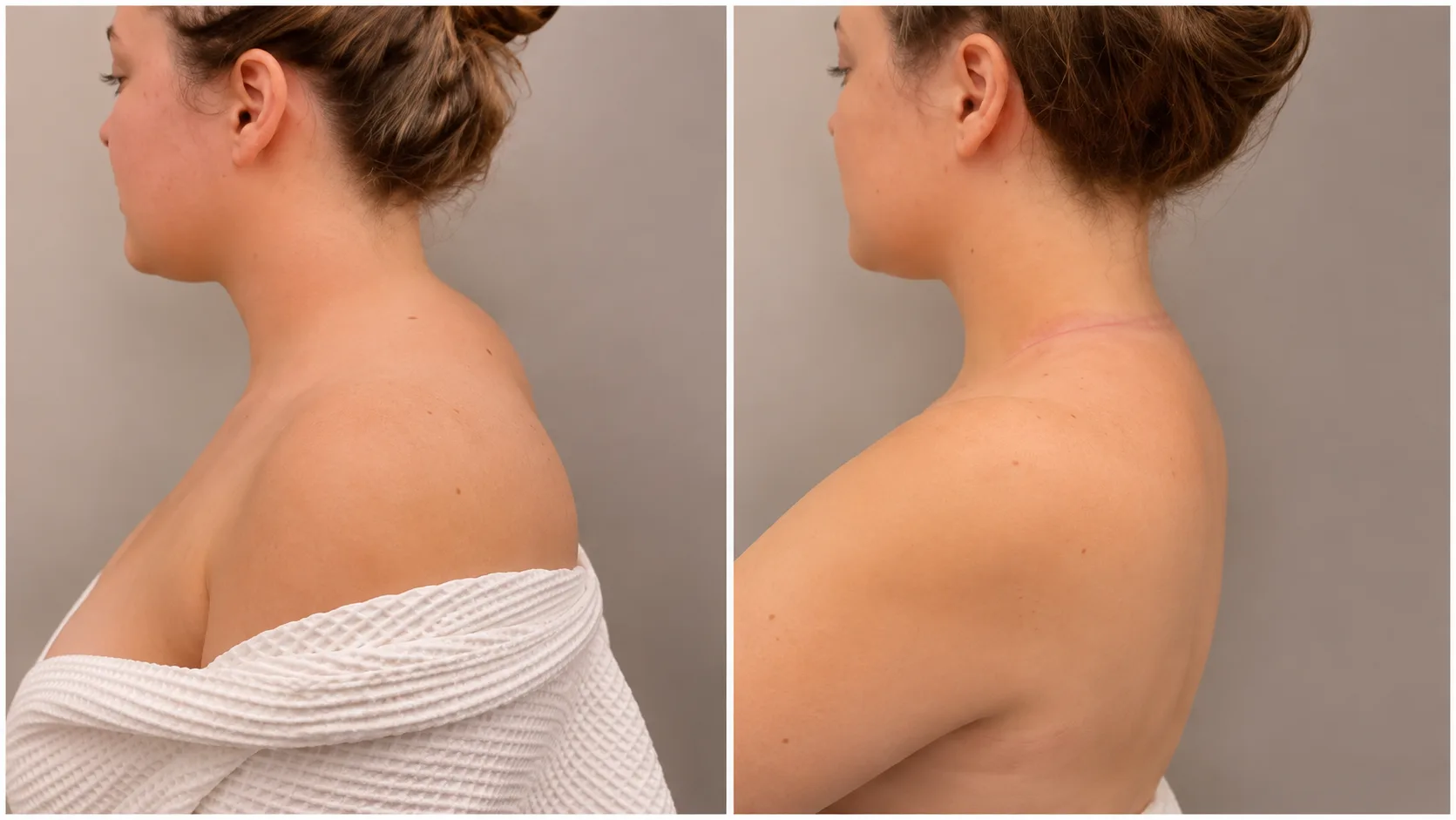
The Main Causes of a Neck Hump
Excess subcutaneous fat in the neck and upper-back (collar) area can form a characteristic rounded prominence. Sometimes it persists even after overall weight loss.
An increase in body fat can be accompanied by changes in the contours of the neck, shoulders, and upper back.
Some endocrine disorders, including conditions with elevated cortisol levels, can be accompanied by a redistribution of fatty tissue.
Long-term use of certain glucocorticosteroids and some other medications can affect how fat is distributed in the body.
Increased thoracic kyphosis, age-related changes in the spine, and poor posture can create the appearance of a neck hump even without a significant local fat deposit.
Sometimes a local prominence is due to a lipoma or another soft-tissue mass that needs separate investigation.
Identifying the cause is the key step in choosing an effective and safe treatment. If the bulge consists mainly of fatty tissue, liposuction of the neck hump may be one treatment option. Other causes call for a different approach.
When Should You Seek a Consultation?
a noticeable increase in tissue volume at the base of the neck;
a change in the contour of the neck and upper back;
marked aesthetic discomfort;
difficulty finding clothes that fit because of the bulge;
a feeling of pressure or discomfort in the neck and upper-back area;
the bulge growing over time;
wanting to find out whether the hump can be removed surgically.
If the bulge is growing quickly, becomes painful, or is accompanied by numbness, weakness, or other unusual symptoms, prompt medical assessment is needed.
How Can a Neck Hump Be Removed?
The correction method depends on the cause of the bulge, the tissue structure, the severity of the changes, and the patient's general health. There is no single procedure that suits every patient.
Neck Hump Liposuction
Liposuction is one of the surgical methods for removing local fat deposits. During the procedure, the surgeon inserts special instruments through small punctures and removes part of the subcutaneous fat. Liposuction of the neck and upper-back area may be considered if the bulge is mainly caused by a local accumulation of fat and there are no contraindications. The aim is to reduce the volume of the fat deposit and correct the contour where the neck meets the upper back.
Liposuction does not, however, treat spinal conditions, poor posture, or endocrine causes of fat accumulation.
Surgical Excision of a Fatty Mass
In some cases, surgical excision of tissue may be needed instead of liposuction. This option is considered, for example, for certain localised masses or particular structural features of the fat deposit. The choice between liposuction and surgical excision is made after an examination.
Posture Correction and Treatment of Spinal Conditions
If the bulge is mainly due to changes in the spine, removing fatty tissue will not solve the problem. In such cases, a consultation with the relevant specialist, therapeutic exercise, rehabilitation, or other treatment may be needed, depending on the diagnosis.
Treatment of Endocrine Disorders
If the fat accumulation is linked to hormonal changes or a disease, the priority is to diagnose and treat the underlying cause. Aesthetic correction, if needed, is considered separately once the medical indications have been assessed.
Benefits of Neck Hump Liposuction
The procedure removes part of the fatty tissue directly where it has built up.
Liposuction is usually performed through small skin punctures, although these may leave barely visible scars.
Reducing the local fat volume can make the transition from the neck to the upper back smoother.
The amount of tissue removed is planned according to the anatomy, the thickness of the fat layer, the condition of the skin, and the expected result.
With properly established indications, liposuction can help correct a local fat deposit that affects the contour of the neck and upper back. It is important to understand that liposuction is a surgical procedure. It has contraindications and risks, and the final aesthetic result varies from person to person.
Diagnosis Before Neck Hump Removal
Before choosing a correction method, it is necessary to determine which tissues form the bulge. Additional investigations are ordered where necessary.
At the Consultation, the Specialist Assesses
the location and size of the bulge;
the density and mobility of the tissues;
the condition of the skin;
posture;
any pain or other symptoms;
how the changes have progressed;
chronic conditions and current medications.
Additional Investigations
Soft-Tissue Ultrasound
Ultrasound can help assess the structure of the subcutaneous tissues and distinguish a diffuse fat accumulation from certain localised masses.
Endocrinologist Consultation
May be needed if hormonal causes of fat redistribution are suspected.
Spinal Examination
If there are signs of kyphosis, marked postural changes, or other musculoskeletal disorders, the doctor may recommend seeing the appropriate specialist and having instrumental investigations.
A comprehensive assessment helps avoid unnecessary surgery.
How Is Neck Hump Removal by Liposuction Performed?
Initial Consultation
The doctor examines the neck and upper back, takes a medical history, discusses the patient's wishes, and explains the possible treatment options.
Preparing for the Procedure
The necessary investigations are carried out before surgery. Their scope depends on the patient's health, the chosen method, and the type of anaesthesia.
The Liposuction Procedure
After anaesthesia, the surgeon makes small access incisions and uses special instruments to remove the planned volume of fat. The surgical technique is chosen individually. The length of the procedure depends on the size and density of the fat deposit and on the chosen technique.
Postoperative Monitoring
After the procedure, the doctor assesses the patient's condition and gives instructions on caring for the treated area. Follow-up appointments and a compression garment are prescribed where necessary.
Recovery After Neck Hump Removal
After liposuction of the neck and upper-back area, swelling, bruising, temporary changes in sensation, and moderate discomfort are possible. How pronounced these are depends on the extent of the procedure and the individual. The first changes in contour may become visible once the swelling subsides. The final result is assessed after the tissues have recovered.
During Recovery It Is Recommended To
follow the surgeon's instructions;
limit physical activity as advised;
avoid pressure on, or injury to, the treated area;
wear a compression garment if prescribed;
attend follow-up appointments;
avoid massage and device-based treatments without the doctor's approval.
Contraindications to Neck Hump Removal
acute infectious diseases;
blood clotting disorders;
certain decompensated chronic conditions;
conditions that increase the risk of anaesthesia or surgical complications;
no indication for removing fatty tissue;
other individual medical restrictions.
Surgical correction is not suitable for every patient. Possible risks of liposuction include bleeding, infection, seroma, contour irregularities, asymmetry, changes in sensation, scarring, and anaesthetic complications. The final decision on surgery is made after an examination.
Can a Neck Hump Be Removed Without Surgery?
In some cases the bulge can be reduced without surgery. If it is linked to general excess body fat, weight loss may help reduce the volume in this area. For postural problems, individually tailored exercises and rehabilitation can be helpful. If an endocrine disorder is the cause, the underlying condition must be treated.
However, massage, exercise, and cosmetic treatments cannot guarantee the removal of a local fat deposit. Their effectiveness depends on what has caused the bulge. That is why it is important to have a diagnosis before choosing non-surgical methods.
Neck Hump Removal and Quality of Life
A pronounced bulge at the neck can affect how people perceive their own appearance and their everyday comfort. The task of modern medicine is not only to change the outward contour but also to determine whether the aesthetic concern is linked to a condition that needs medical treatment. If the neck hump is caused by a local fat accumulation, surgical correction may be considered as one way of improving the body contour. If, however, the bulge is related to spinal changes or endocrine disorders, appropriate treatment becomes the priority. This approach makes it possible to choose a solution based on the real causes of the changes rather than on their outward appearance alone.
At GENEVITY — the Centre for Longevity and Quality of Life — the approach to such changes takes into account both the patient's aesthetic wishes and their health.
How Much Does Neck Hump Removal Cost in Dnipro?
The price of neck hump removal in Dnipro depends on the chosen correction method, the extent of the procedure, and the patient's individual characteristics.
Factors That May Affect the Cost
the need for preliminary diagnosis;
the size and structure of the fat deposit;
the chosen surgical technique;
the type of anaesthesia;
the complexity of the procedure;
the need for postoperative monitoring.
The exact cost is determined after a consultation and a treatment plan. If a bulge at the base of your neck concerns you, do not choose a procedure based on its appearance alone. The first step is to find out why it has developed and to assess the possible correction methods. Ask about a consultation for a neck hump and the available diagnostic and surgical correction options.
Our Medical Team
Consultations are provided by specialists across multiple disciplines, ensuring a comprehensive approach to your health

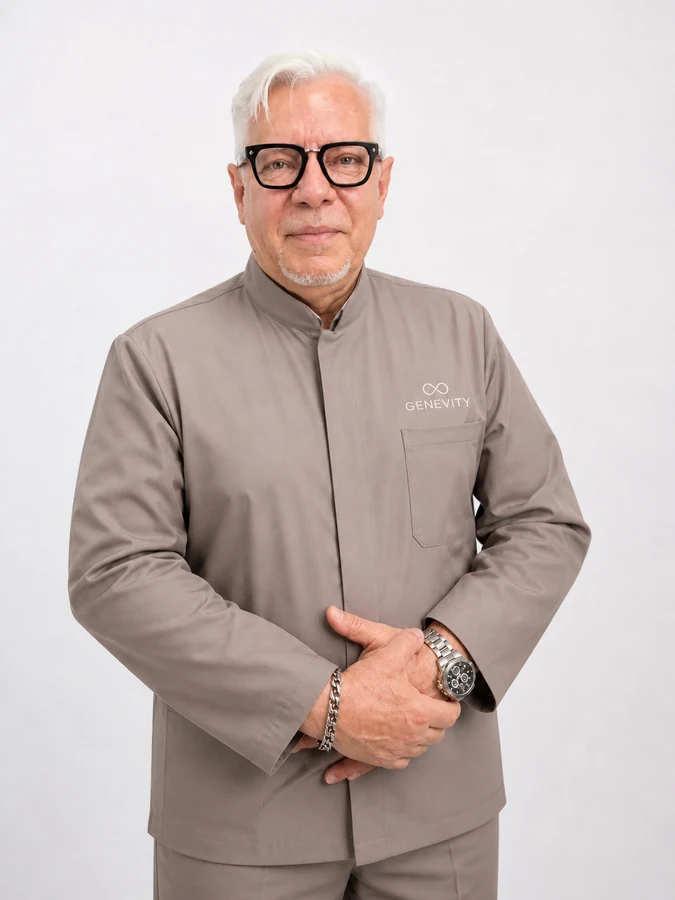
Harmash Serhii Kostiantynovych
Plastic Surgeon, Oncologist, Dermatologist
Experience: 41 years
Learn MoreYou may also be interested in
Liposuction
Liposuction at GENEVITY is the surgical removal of localised fat deposits that persist at a stable weight and do not respond to diet or exercise. It reshapes the contours of specific areas, but it is not a weight-loss method: it addresses shape rather than body mass.
Body Contouring
Body contouring at GENEVITY is comprehensive surgical reshaping of the silhouette for cases where a single procedure is not enough. The plan may combine liposuction of several areas, removal of excess skin and work on the muscles, so that the proportions of the body are coherent rather than improved in one isolated area.
Neck Lift Surgery
Neck lift surgery (platysmaplasty) at GENEVITY is a surgical procedure designed to correct age-related changes in the neck and chin area, reduce sagging tissues and excess skin, and restore a more defined neck and chin contour. The plastic surgeon selects the most appropriate technique individually, taking into account anatomical features, skin and muscle condition, the extent of age-related changes, and the desired outcome.
FAQ
If the bulge consists mainly of a local fat deposit, surgical correction can reduce its volume significantly. Whether it can be removed completely, however, depends on the anatomy, the tissue structure, and the cause.
Liposuction can be effective when the bulge is made up of fat. If it is caused by curvature of the spine, the method will not address the underlying problem.
Fat can accumulate again, especially if the factors that caused its redistribution persist. Removing the fat does not guarantee that the bulge will never return.
Anaesthesia is used during the operation. Afterwards, tenderness, swelling, and a feeling of tightness are possible. The doctor decides how any discomfort is managed.
Recovery time varies from person to person. It depends on the extent of the operation, the characteristics of the tissues, and how the postoperative period goes.
Massage may temporarily relieve muscle tension, but it is not a proven way of removing an established fat deposit or correcting structural changes in the spine.
You can start with a doctor who will assess the nature of the bulge and decide whether you need to see a surgeon, an endocrinologist, or a spine specialist.
Surgery can leave scars. With liposuction the access points are usually small, but their final appearance depends on how the individual heals.
Book a consultation
Our specialists will create the optimal program for you
This information is for general awareness and does not replace a doctor's consultation.