Breast Lift With Implants in Dnipro
A breast lift with implants (augmentation mastopexy) combines correction of breast ptosis with an increase in volume. The technique lifts the breasts, improves their shape, and restores lost volume using breast implants.
What Is a Breast Lift With Implants?
An augmentation mastopexy combines two surgical procedures: a breast lift and implant placement. During the operation the plastic surgeon removes excess skin, reshapes the breast tissue, repositions the nipple-areola complex, and places implants to increase volume. The key difference from a standard mastopexy is the ability not only to lift the breasts but also to increase their size and improve fullness in the upper pole. The procedure may be carried out in one stage or in two. The choice depends on breast anatomy, the degree of ptosis, and surgical risk.
At GENEVITY — the Centre for Longevity and Quality of Life in Dnipro — aesthetic correction is approached with regard to each patient's individual anatomy, health status, and personal goals.
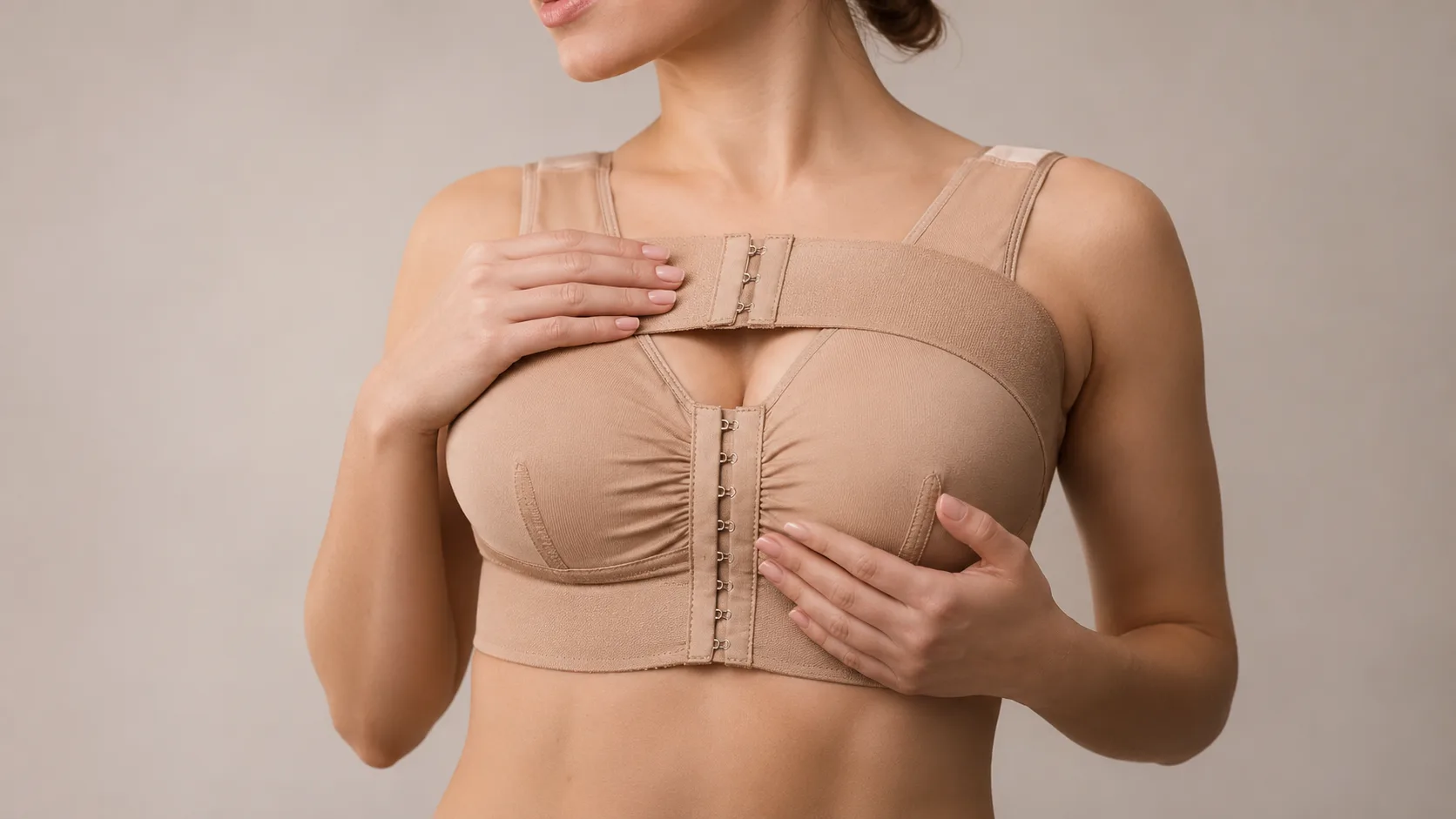
Indications for a Breast Lift With Implants
- breast ptosis after pregnancy and breastfeeding;
- loss of breast volume after weight loss;
- age-related changes in breast shape;
- downward displacement of the nipples;
- insufficient fullness in the upper part of the breast;
- breast asymmetry;
- a wish to lift and enlarge the breasts at the same time.
Contraindications for Augmentation Mastopexy
- Acute infections.
- Decompensated chronic conditions.
- Blood clotting disorders.
- Other conditions that raise surgical risk.
- Pregnancy and breastfeeding.
- Other individual restrictions identified by the physician.
Techniques for a Breast Lift With Implants
Periareolar mastopexy with implants. The incision is made around the areola. The technique may be used for mild ptosis with a limited amount of excess skin.
Vertical mastopexy with implants. The incision runs around the areola and vertically down to the inframammary fold. The method allows a more pronounced lift and reshaping of the breast.
Anchor mastopexy with implants. The incision runs around the areola, vertically downwards, and along the inframammary fold. It is more often considered for significant ptosis and pronounced excess skin.
The choice of technique depends on the degree of breast ptosis and the amount of excess skin. The type, size, and placement of the implants are selected individually, and the appropriate method is determined after a consultation with a plastic surgeon.
Advantages of a Breast Lift With Implants
Lift the breasts and correct the position of the nipples.
Increase volume with implants.
Improve the shape and fullness of the upper pole of the breast.
Remove excess skin and reduce the degree of ptosis.
Correct asymmetry within the limits of what surgery can achieve.
The outcome depends on the initial anatomy, the implants chosen, and individual healing.
How Is a Breast Lift With Implants Performed?
Before surgery the plastic surgeon assesses breast shape and volume, the degree of ptosis, skin quality, and the patient's health. With certain anatomical features the surgeon may recommend carrying out the procedures in stages.
The Main Stages
Consultation and examination. Establishing the indications and discussing the outcome and the necessary breast investigations.
Implant selection. Choosing size, shape, and other characteristics to suit the anatomy.
Marking. Planning the incision lines and the new position of the nipple-areola complex.
Anaesthesia. The operation is usually performed under general anaesthesia.
Surgical correction. Implant placement, reshaping of the breast tissue, removal of excess skin, and the lift itself.
Postoperative monitoring. Assessment of tissue condition and recovery instructions.
Recovery After a Breast Lift With Implants
Swelling, bruising, tenderness, a feeling of tightness, and temporary changes in breast sensation are possible after surgery. Some patients return to sedentary work after 1–2 weeks, although timelines vary. Intense training is usually restricted for several weeks. The final breast shape settles gradually as the tissues heal and the implants settle into position.
During Rehabilitation It Is Recommended To
wear the prescribed support garment;
limit physical activity;
avoid pressure on the breasts;
follow the instructions for suture care;
take the prescribed medication;
attend the scheduled follow-up appointments.
Do Scars Remain After the Operation?
Yes. A breast lift with implants involves surgical incisions, which leave scars. Their location depends on the technique used: around the areola, vertically downwards, or additionally along the inframammary fold. Over time the scars may become less noticeable, but they do not disappear completely.
Possible Complications
bleeding and haematoma;
infection;
impaired healing;
noticeable scarring;
breast asymmetry;
changes in nipple sensation;
compromised blood supply to the tissues;
recurrent breast ptosis;
the need for a repeat operation.
Surgery may be postponed in cases of acute infection, decompensated chronic illness, blood clotting disorders, and other conditions that raise surgical risk. Additional implant-related risks include capsular contracture, implant rupture or displacement, and the rare cancers associated with certain types of breast implant. Implants are not considered lifetime devices. Further surgery may be needed in the future, and after silicone implants are placed, monitoring of their integrity is recommended. Whether breastfeeding remains possible after surgery depends on the surgical technique and cannot be guaranteed.
Breast Lift With or Without Implants?
Without implants — a lift using the patient's own tissue; with implants — a lift plus an increase in volume.
Without implants — no endoprostheses are placed; with implants — breast implants are used.
Without implants — not intended for a significant increase in size; with implants — breast size can be increased.
Without implants — there are no implant-specific risks; with implants — the condition of the implants must be monitored over time.
The choice depends on the starting breast volume, the degree of ptosis, and the desired result.
The Cost of a Breast Lift With Implants in Dnipro
The cost of a breast lift with implants depends on the mastopexy technique chosen, the complexity of the operation, the characteristics of the implants, the type of anaesthesia, and the extent of postoperative monitoring. Preoperative investigations and the need for a staged correction may also affect the price. The exact cost is determined after a consultation with a plastic surgeon.
If you want to lift the breasts and increase their volume at the same time, start with a consultation with a qualified plastic surgeon. The specialist will assess the degree of breast ptosis, skin quality, and breast structure, and will help you choose a suitable technique and implants. Ask about the availability of a breast lift with implants, current pricing, and how to book a consultation.
Our Medical Team
Consultations are provided by specialists across multiple disciplines, ensuring a comprehensive approach to your health

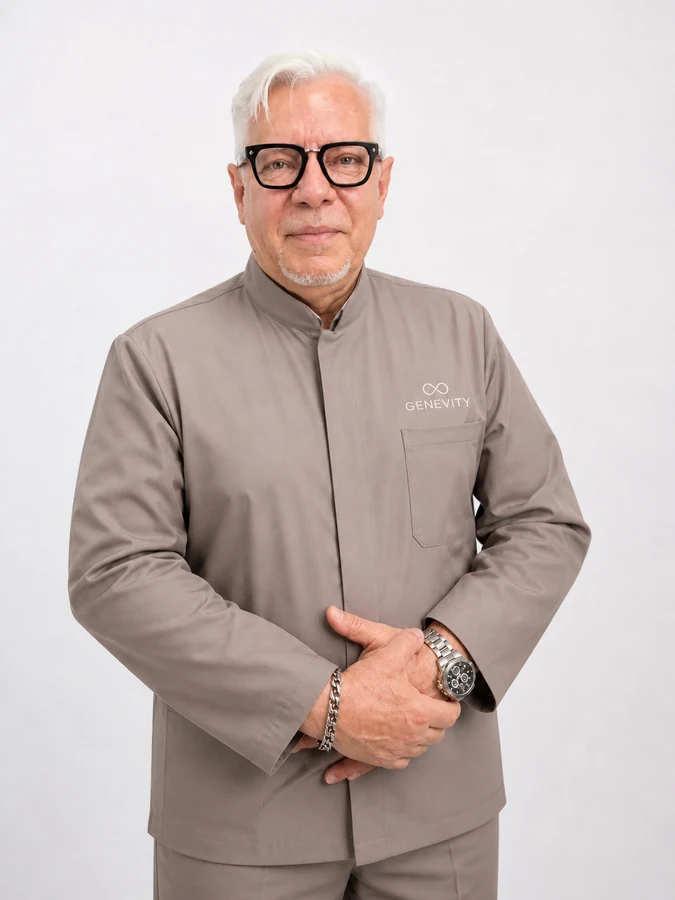
Harmash Serhii Kostiantynovych
Plastic Surgeon, Oncologist, Dermatologist
Experience: 41 years
Learn MoreYou may also be interested in
Breast Lift
A breast lift (mastopexy) at GENEVITY is the surgical correction of breast position without changing volume. The operation removes excess stretched skin and moves the nipple-areola complex to a higher position. Where needed, mastopexy is combined with augmentation or reduction.
Breast Augmentation
Breast augmentation at GENEVITY is mammoplasty using implants to change the volume and shape of the breasts. The plastic surgeon selects the type, shape and size of implant, together with the approach and the plane of placement, individually, taking into account the anatomy of the chest, the condition of the tissues and body proportions.
Breast Lift Without Implants
A breast lift without implants (mastopexy) is a procedure that addresses breast ptosis, improves breast shape, and restores a higher nipple position. The correction uses the patient's own breast tissue, without placing silicone implants.
FAQ
Yes. An augmentation mastopexy combines a breast lift with implant placement. In some cases, however, it is safer to carry out the procedures in stages.
The type, size, shape, and surface of the implants are selected individually, taking anatomy and surgical risk into account.
Where shape changes are minor, augmentation alone is sometimes enough. With pronounced ptosis, implants usually do not replace a mastopexy.
Yes. The location of the scars depends on the lifting technique used.
There is no requirement to replace them exactly after 10 years. However, implants have a limited lifespan, require monitoring, and may in time need to be replaced or removed.
The result can last for many years, but pregnancy, weight fluctuations, and natural ageing continue to affect breast shape.
Book a consultation
Our specialists will create the optimal program for you
This information is for general awareness and does not replace a doctor's consultation.